Language
 永住申請お役立ちコラム

Obtaining Permanent Residence from the Business Manager Visa: Requirements Explained
- 2026年05月15日
Full Support for Japanese Permanent Residency Applications!

Operated by: Touch Immigration Law Firm


目次
The Engineer / Specialist in Humanities / International Services visa is one of the Statuses of Residence required for foreign nationals to work in Japan. Many foreign nationals actually working in Japan reside and work in the country under this Engineer / Specialist in Humanities / International Services visa.
The Engineer / Specialist in Humanities / International Services visa carries certain restrictions: the Status of Residence may be revoked if a period of unemployment continues for a certain length of time, and the holder may not engage in manual or operational work.
In addition, the holder cannot independently become a sole proprietor or a corporate manager unless they change their Status of Residence. For this reason, a great many foreign nationals consider obtaining Permanent Residence from the Engineer / Specialist in Humanities / International Services visa as they look ahead to their future life in Japan.
This page explains the key points for obtaining Permanent Residence from the Engineer / Specialist in Humanities / International Services visa.
There are six requirements for obtaining Permanent Residence from the Engineer / Specialist in Humanities / International Services visa, as follows:
To apply for Permanent Residence, as a general rule, the applicant must have resided continuously in Japan for 10 years or more, and within that period must have lived in Japan for 5 years or more under a work-related Status of Residence (such as Engineer / Specialist in Humanities / International Services).
For example, if a person resided in Japan for 7 years as a student and then switched to the Engineer / Specialist in Humanities / International Services visa for 3 years, they do not satisfy the residence requirement. In this case, residence of 5 years as a student plus 5 years or more on the Engineer / Specialist in Humanities / International Services visa is required. Furthermore, “5 years or more on a work-related Status of Residence” refers to the most recent 5 years calculated from the time of the Permanent Residence application.
Therefore, for example, if a person worked on the Engineer / Specialist in Humanities / International Services visa for 2 years, then switched to a Student Status of Residence to attend school, and then switched back to the Engineer / Specialist in Humanities / International Services visa for 3 years of work, the most recent 5 years are not entirely on a work visa, so the residence requirement is not satisfied. In addition, satisfying the income requirement is also difficult in such cases, so the applicant must have been residing in Japan on the Engineer / Specialist in Humanities / International Services visa for the most recent 5 years calculated from the time of the Permanent Residence application.
The approach to departures from Japan is the same as for Permanent Residence applications from other Statuses of Residence: if departures are frequent, the count toward the continuous 10-year requirement may be reset. A single departure of 90 days or more, or departures totaling more than half a year within one year, will be treated as a negative factor in the Permanent Residence review.
The period of stay currently granted under the Engineer / Specialist in Humanities / International Services visa Status of Residence must be the longest one. In other words, even if you hold the Engineer / Specialist in Humanities / International Services visa Status of Residence, this requirement is not satisfied if the period of stay granted is only 1 year.
The periods of stay available under the Engineer / Specialist in Humanities / International Services visa Status of Residence are 1 year, 3 years, or 5 years. While one might assume that a 5-year period is required, a period of stay of 3 years or more is sufficient to satisfy this requirement.
When obtaining Permanent Residence from the Engineer / Specialist in Humanities / International Services visa, the conditions regarding income are largely the same as for applications from other Statuses of Residence. As a guideline, an annual income of 3 million yen or more is required. If there are dependents, an additional 200,000 to 300,000 yen per dependent is required.
If you are married and your spouse resides in Japan on a Dependent visa and works part-time, the spouse’s income is not added to your own.
If you are receiving public assistance and have become a burden on public funds, obtaining Permanent Residence will be difficult. The same applies if you are married and your spouse is receiving public assistance.
This means complying with the law and leading a life as a resident that is not socially criticized in daily life.
The point to note when applying for Permanent Residence from the Engineer / Specialist in Humanities / International Services visa is the case where the applicant is married and the spouse holds a Dependent Status of Residence. Even with Permission to Engage in Activities Other Than That Permitted by the Status of Residence Previously Granted, if the spouse is working more than 28 hours per week, the good conduct requirement is not satisfied. This affects the good conduct requirement as a matter of inadequate supervision, even though it concerns someone other than the applicant. The other requirements are the same as for applications from other Statuses of Residence.
Resident tax and pension premiums must have been paid at the appropriate times. Unpaid amounts are out of the question; even if payments have been completed, any delays past the payment deadlines will make it difficult to obtain approval. A Permanent Residence application requires that the appropriate taxes have been paid at the appropriate times.
This page has explained the key points for obtaining Permanent Residence from the Engineer / Specialist in Humanities / International Services visa. The income requirement for obtaining Permanent Residence from this visa has, since July 2019, required the submission of taxation certificates for the most recent 5 years (previously, the most recent 3 years).
Previously, the submission of 3 years of taxation certificates was sufficient, but since it is now 5 years, the applicant must maintain a stable income over a longer period, and the bar for the income requirement has been raised compared to before. In addition, since October 2021, a document called the “Letter of Acknowledgment” has been added, and if the applicant changes jobs during the review period, this must be reported to the Immigration Bureau immediately.
永住申請お役立ちコラム
永住申請お役立ちコラム

永住申請お役立ちコラム

永住申請お役立ちコラム
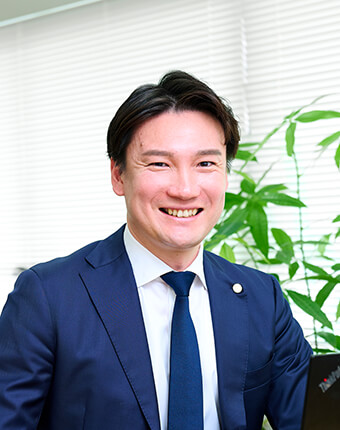
| August 2018 | Established “Yuda Administrative Scrivener Office,” specializing in visa applications and naturalization applications |
|---|---|
| April 2022 | Incorporated the private office as “Touch Immigration Law Firm” |
| Areas of Expertise | Foreign nationals’ statuses of residence and naturalization applications Specializes in foreign national visa-related matters and handles more than 1,000 consultations annually |
| Seminar Experience | Numerous seminars, including the International Administrative Scrivener Training Course, Toda City International Exchange Foundation, Saitama Japanese Language Network, Administrative Scrivener TOP 10% Club, and work visa training seminars for administrative scriveners |
| Operated Websites | Touch Immigration Law Firm International Marriage & Spouse Visa Support Center Naturalization Application Support Center Work Visa Support Center Permanent Resident Visa Support Center Business Manager Visa Support Center U.S. Visa Support Center Visa Support Center |
For a smooth application, start with a free consultation