Language
 永住申請お役立ちコラム

How to Obtain Permanent Residency from a Work Visa
- 2026年05月14日
Full Support for Japanese Permanent Residency Applications!

Operated by: Touch Immigration Law Firm


目次
The Highly Skilled Professional Points System is a system implemented since 2012 to promote the acceptance of Highly Skilled Foreign Professionals, providing them with preferential immigration measures based on a point system.
The system aims to promote the acceptance of Highly Skilled Foreign Professionals into Japan by granting preferential immigration measures when their total Highly Skilled Foreign Professional points reach 70.
“Highly Skilled Professional” is divided into 3 categories — Advanced Academic Research Activities, Advanced Specialized/Technical Activities, and Advanced Business Management Activities — and points are assigned to items such as “education,” “work history,” and “annual income” on the point evaluation table according to the characteristics of each category.
The following sections explain each category in detail.
These are activities of conducting research, providing research guidance, or providing education based on a contract with a Japanese public or private organization. University professors and the like fall under this category.
The corresponding general visas are mainly “Professor,” “Researcher,” and “Instructor.”
These are activities of engaging in work requiring knowledge or skills in the natural sciences or human sciences, based on a contract with a Japanese public or private organization.
Basically, those other than researchers and corporate managers who wish to obtain the Highly Skilled Professional status will obtain this “Highly Skilled Professional (i)(b).”
The corresponding general visas are mainly “Engineer / Specialist in Humanities / International Services,” “Intra-company Transferee,” “Legal/Accounting Services,” and “Medical Services.”
These are activities of managing or administering a business at a Japanese public or private organization. Corporate managers and the like fall under this category.
The corresponding general visas are mainly “Business Manager” and “Legal/Accounting Services.”
In addition, Highly Skilled Professional does not have a strict one-to-one correspondence with other general visas, so a single activity may fall under two or more Highly Skilled Professional categories.
For example, if a foreign national who is a corporate manager requires specialized technical or humanistic knowledge in operating the company, they fall under both Highly Skilled Professional (i)(b) and (c). In this case, the Highly Skilled Professional points can be calculated using whichever point calculation table is most advantageous to the foreign national.
In April 2023, the Special Highly Skilled Professional System (J-Skip) was introduced. Those whose education or work history, along with annual income, meet certain levels are now recognized as “Special Highly Skilled Professionals” and granted further expanded preferential measures beyond those for ordinary “Highly Skilled Professional” foreign nationals.
The requirements for “Special Highly Skilled Professional” differ by category. If the requirements are met, the “Highly Skilled Professional” visa is granted without needing to calculate points.
Foreign nationals falling under Advanced Academic Research Activities or Advanced Specialized/Technical Activities qualify as “Special Highly Skilled Professionals” if they meet the following two requirements.
Foreign nationals falling under Advanced Business Management Activities qualify as “Special Highly Skilled Professionals” if they meet the following two requirements.
Ordinarily, to apply for Permanent Residence, the applicant must have resided in Japan for 10 consecutive years, and within that period must have resided on a work visa for the most recent 5 years. However, as part of the preferential measures for Highly Skilled Professionals, the residence-year requirement for Permanent Residence applications has been significantly relaxed.
Specifically, those with 70 or more Highly Skilled Professional points can apply for Permanent Residence after residing in Japan for 3 consecutive years or more. Those with 80 or more points, or those qualifying as “Special Highly Skilled Professionals,” can apply after just 1 year, further relaxed.
In addition, foreign nationals wishing to apply for Permanent Residence with a shortened period using the Highly Skilled Professional system are not required to reside in Japan on the “Highly Skilled Professional” visa. Even when residing on another work visa, they can apply for Permanent Residence with the shortened period if they have 70 or more points both at present and 3 years ago. The same applies to those with 80 or more points or qualifying as “Special Highly Skilled Professionals” both at present and 1 year ago.
In addition to the relaxation of the period of stay required for a Permanent Residence application, Highly Skilled Professionals enjoy the following further preferential measures.
Ordinary work visas are initially granted for a period of 3 years or 1 year, but the “Highly Skilled Professional” visa is granted from the outset with the maximum 5-year period of stay permitted under the Immigration Control Act. This greatly reduces the burden of visa renewals.
Highly Skilled Foreign Professionals with a household annual income of 10 million yen or more can employ one foreign domestic worker if any of the following conditions are met.
Ordinarily, there is no visa for the parents of working foreign nationals to reside in Japan, but in the case of Highly Skilled Professionals, parents can be brought to Japan if the following conditions are met.
Parents who may be brought are the parents of either the foreign national or their spouse — one set only.
Generally, when the spouse of a working foreign national wishes to work 28 hours or more per week, a certain level of education or work history is required. However, when the spouse of a Highly Skilled Foreign Professional wishes to work in activities under the “Researcher,” “Instructor,” “Engineer / Specialist in Humanities / International Services,” or “Entertainer” visa, education and work history are not required. Furthermore, for spouses of Special Highly Skilled Professionals, the same applies to “Professor,” “Artist,” “Religious Activities,” “Journalist,” and “Skilled Labor.”
Highly Skilled Foreign Professionals may, in addition to their main work activities, independently operate related businesses without separately obtaining Permission to Engage in Activities Other Than That Permitted by the Status of Residence Previously Granted.
Applications for Certificates of Eligibility and applications for change or renewal of Status of Residence concerning Highly Skilled Professionals are processed on a priority basis for early completion.
Special Highly Skilled Professionals may use VIP priority lanes for immigration inspection at major airports such as Haneda, Narita, and Kansai International Airport.
Since the evaluation criteria differ across the 3 categories, points can be calculated using the Excel calculation table on the Ministry of Justice website below.
Ministry of Justice website
https://www.moj.go.jp/isa/applications/resources/newimmiact_3_evaluate_index.html
As noted above, foreign nationals with 70 or more Highly Skilled Professional points must reside in Japan for 3 consecutive years.
Those with 80 points or more, or Special Highly Skilled Professionals, must reside for 1 year.
It is not necessary to continuously meet the 70- or 80-point threshold throughout the entire applicable period. The requirement is satisfied as long as sufficient points are held at the start of the period and at the time of application.
Note that continuous residence in Japan is required. Even if you have obtained a Re-entry Permit, if you stay outside Japan for a long period (generally 100 consecutive days or 6 months or more in a year), the continuous residence period may be reset.
In such cases, if there are reasonable grounds for the departure — such as a long-term overseas business assignment by company order, or returning home for childbirth — there is a possibility that the absence will be judged as no problem, so it is important to provide a clear explanation in a written statement at the time of the Permanent Residence application.
Regardless of the length of the departure, if you complete an overseas relocation procedure at the city hall and no longer have an address in Japan, the continuous residence period is reset from that point.
It is required that public duties such as various taxes, pension, and insurance be properly fulfilled. The following items are confirmed in a Permanent Residence application.
|
Item |
Highly Skilled Professional Points 70 or More |
Highly Skilled Professional Points 80 or More Special Highly Skilled Professional |
|---|---|---|
|
Resident tax |
3 years |
1 year |
|
Pension / health insurance premiums |
||
|
National tax |
Whether there are any unpaid amounts in the past |
|
Note that it is not enough merely to have paid in full; it is a condition for obtaining Permission for Permanent Residence that, during the above periods, payments have been made properly by the deadlines. If there are delinquencies, the delinquent amounts must first be paid; even then, the Immigration Bureau may require that the above periods elapse again and that taxes and the like within those periods be paid.
It is important not to have received a fine or imprisonment. If you have received such a sentence in the past, a certain period (approximately 5 to 10 years) must have passed since the date of disposition.
The number of traffic violations is also confirmed in the review. For those who have received a driver’s license suspension, Permission for Permanent Residence will not be granted for at least 5 years from the date of the suspension, so caution is required.
A Permanent Residence applicant must not be a burden on public funds in daily life, and based on their assets, skills, etc., must be expected to lead a stable life in the future. They must also demonstrate that they have continuous income.
Generally, an annual income of 3 million yen or more is the guideline, with an additional 200,000 to 300,000 yen per dependent required when there are dependents. Note that an annual income of 3 million yen or more is itself a requirement to become a Highly Skilled Professional, so the livelihood foundation requirement is generally not a concern.
In addition, for company managers, the stability and continuity of the company they manage is also reviewed; if the managed company has shown consecutive losses, there may be a finding of a problem with the livelihood foundation.
Family members (spouse and children) may, in some cases, apply for Permanent Residence simultaneously with the Highly Skilled Foreign Professional.
Ordinarily, a foreign national applying for Permanent Residence must have resided in Japan for 10 consecutive years or more. However, when a Highly Skilled Foreign Professional applies under the shortened period available through the system and obtains approval, their spouse and children at that point take on the status of “Spouse or Child of Permanent Resident,” so the required period of stay is shortened.
In this case, the requirements for the spouse to apply together with the Highly Skilled Foreign Professional are a substantive marriage of 3 years or more and continuous residence in Japan of 1 year or more.
“Substantive marriage” here mainly refers to the couple living together. If they are living separately without legitimate reasons (such as a solo work assignment or caring for a family member), the marriage may not be recognized as a substantive marriage.
The children of the Highly Skilled Foreign Professional can apply together if they have resided continuously for 1 year or more. Whether they live together is not relevant.
“Highly Skilled Professional (ii)” is a visa that can be obtained by foreign nationals who have resided in Japan for 3 years or more (1 year or more for Special Highly Skilled Professionals) on the “Highly Skilled Professional (i)” visa. As with “Permanent Resident,” this visa has an indefinite period of stay.
Foreign nationals holding this visa can engage in any of the 3 types of activities described above — “Advanced Academic Research Activities,” “Advanced Specialized/Technical Activities,” and “Advanced Business Management Activities.” While engaging in these activities, they can also engage in activities corresponding to each work visa.
Permanent Resident is a Status of Residence that allows residence in Japan based on one’s status, whereas Highly Skilled Professional (ii) is, after all, a visa for conducting specialized work activities. Compared with Permanent Resident, which similarly allows indefinite residence, it has the following restrictions.
Grounds for Revocation of Status of Residence
For Permanent Residents, the Status of Residence will not be revoked unless certain serious crimes are committed. In contrast, foreign nationals on Highly Skilled Professional (ii) may have their Status of Residence revoked in addition to crimes, if a period of unemployment of 6 months or more elapses.
Restrictions on Work Activities
Permanent Residents have no restrictions on employment and can engage in any occupation. In contrast, foreign nationals on Highly Skilled Professional (ii) must mainly engage in one of the 3 types of work activities — “Advanced Academic Research Activities,” “Advanced Specialized/Technical Activities,” and “Advanced Business Management Activities” — and their secondary work activities must also correspond to the various work visas. Violations may result, in the worst case, in forced deportation from Japan as engaging in activities outside the Status of Residence, so please be careful.
On the other hand, there are matters not permitted to Permanent Residents but permitted only on the Highly Skilled Professional visa: the employment of foreign domestic workers and bringing parents. As noted above, Highly Skilled Foreign Professionals meeting certain conditions are permitted these two matters, but Permanent Residents cannot bring domestic workers or parents.
In addition, the requirement for changing to Highly Skilled Professional (ii) is simply 3 years or more (1 year for Special Highly Skilled Professionals) of residence history in Japan on Highly Skilled Professional (i). Therefore, if you change to Permanent Resident after 3 years of residence with 70 or more Highly Skilled Professional points, and later wish to bring your parents, you can switch to Highly Skilled Professional (ii).
Furthermore, a change to Highly Skilled Professional (ii) is much faster than a Permanent Residence application. According to the latest Immigration Bureau published data, the average review period for a change to Highly Skilled Professional (ii) is approximately 2 months, while the average review period for a Permanent Residence application is 8 months or more. At the Tokyo Immigration Bureau in particular, where the number of applications is large, a wait of over a year is required.
In addition, those whose period of stay expires during a Permanent Residence application must, in addition to the Permanent Residence application, also apply for renewal of period of stay. If you fail to apply and overstay your period of stay in Japan, you become an illegal overstayer, and not only will the current Permanent Residence application be denied, but you will also become subject to deportation. In contrast, for a change application to Highly Skilled Professional (ii), no separate renewal application is required, and you can legally remain in Japan for an additional 2 months from the expiration date of the Residence Card. The result of the application will also be issued by the legal stay deadline.
When applying for Permanent Residence using the Highly Skilled Professional system, you must go in person to the Immigration Bureau with jurisdiction over your residence and submit the application documents at the counter.
Many visa procedures can now be applied for online, but Permanent Residence applications still require going to the Immigration Bureau.
In addition, while waiting for the review, the Immigration Bureau may request additional documents.
Finally, when the result of the application is issued, you must again go to the Immigration Bureau counter to receive your new Residence Card.
The following are documents common to all categories of Permanent Residence applications, including those for Highly Skilled Professionals.
Permission for Permanent Residence application form in the format designated by the Ministry of Justice
In the case of the Highly Skilled Professional system, the verification period for tax payment certificates and pension/health insurance payment records is, as described above, 3 years or 1 year.
To prove that the point requirement is met, the following documents are also required.
Administrative Scrivener Corporation Touch provides full support for Highly Skilled Professional visa and Permission for Permanent Residence (Permanent Resident status) applications.
We confirm whether you meet the requirements for the “Highly Skilled Professional” or “Permanent Resident” Status of Residence, and if you do, we can prepare all the necessary documents.
Even if you do not meet the requirements, we can advise you on what to do to obtain other work visas or Permission for Permanent Residence.
The required documents for the Highly Skilled Professional system can be voluminous and complex, but with our office’s support, the procedures can be carried out smoothly.
If you are considering applying for a Highly Skilled Professional work visa or Permission for Permanent Residence, please consult “Administrative Scrivener Corporation Touch.”
永住申請お役立ちコラム
永住申請お役立ちコラム

永住申請お役立ちコラム

永住申請お役立ちコラム

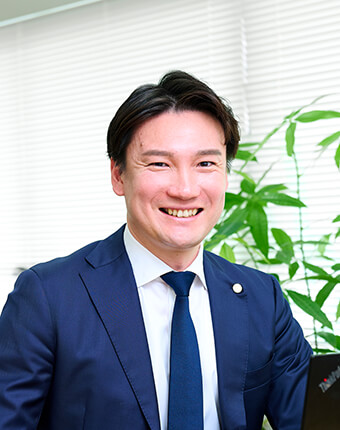
| August 2018 | Established “Yuda Administrative Scrivener Office,” specializing in visa applications and naturalization applications |
|---|---|
| April 2022 | Incorporated the private office as “Touch Immigration Law Firm” |
| Areas of Expertise | Foreign nationals’ statuses of residence and naturalization applications Specializes in foreign national visa-related matters and handles more than 1,000 consultations annually |
| Seminar Experience | Numerous seminars, including the International Administrative Scrivener Training Course, Toda City International Exchange Foundation, Saitama Japanese Language Network, Administrative Scrivener TOP 10% Club, and work visa training seminars for administrative scriveners |
| Operated Websites | Touch Immigration Law Firm International Marriage & Spouse Visa Support Center Naturalization Application Support Center Work Visa Support Center Permanent Resident Visa Support Center Business Manager Visa Support Center U.S. Visa Support Center Visa Support Center |
For a smooth application, start with a free consultation