Language
 永住申請お役立ちコラム

How to Obtain Permanent Residency from a Work Visa
- 2026年05月14日
Full Support for Japanese Permanent Residency Applications!

Operated by: Touch Immigration Law Firm


目次
When both Permanent Residence and the Highly Skilled Professional visa are obtainable, we sometimes receive inquiries about which one should be obtained. In choosing between the two, it is necessary to understand the advantages and disadvantages of Permanent Residence and the Highly Skilled Professional visa.
This page focuses on explaining the advantages and disadvantages of Permanent Residence and the Highly Skilled Professional visa.
A foreign national who has obtained Permanent Residence has an indefinite period of stay and can continue to reside in Japan as long as they do not engage in conduct (such as a crime) that would result in revocation of their Status of Residence. However, the Residence Card must be renewed once every 7 years.
Furthermore, if the requirements are met, the holder can also bring their spouse and children residing in their home country to Japan.
In addition, there are no restrictions on employment, so the holder can manage a company, and even if unemployed, the Status of Residence will not be revoked. Permanent Residence can be described as a Status of Residence with almost no restrictions on activities in Japan.
The Highly Skilled Professional visa is divided into Type 1 (i) and Type 2 (ii), so the outline of each will be briefly explained.
The Highly Skilled Professional (i) Status of Residence is granted to those who reach a total of 70 points or more, calculated by assigning points to items such as academic background, work history, and annual income.
The period of stay for the Highly Skilled Professional (i) visa is 5 years, and while there are few restrictions on employment, becoming unemployed falls under the grounds for revocation of the Status of Residence.
The Highly Skilled Professional (ii) Status of Residence is granted to those who reach a total of 80 points or more, calculated by assigning points to items such as academic background, work history, and annual income.
As with Permanent Residence, the period of stay for the Highly Skilled Professional (ii) visa is indefinite, but the Residence Card must be renewed once every 7 years.
While there are few restrictions on employment, unlike Permanent Residence, becoming unemployed falls under the grounds for revocation of the Status of Residence.
Having outlined Permanent Residence and the Highly Skilled Professional visa above, the following sections explain the advantages and disadvantages of each.
The period of stay for Permanent Residence and the Highly Skilled Professional (ii) visa is indefinite, but the period of stay for the Highly Skilled Professional (i) visa is 5 years, so renewal of the period of stay is required. In addition, when applying for renewal of the period of stay, if the total point score falls below 70 points, renewal of the period of stay on the Highly Skilled Professional (i) visa cannot be granted.
In the case of Permanent Residence, the Status of Residence will not be revoked unless a crime is committed. In the case of the Highly Skilled Professional (i) and (ii) visas, however, in addition to crimes, a period of unemployment of 6 months or more falls under the grounds for revocation of the Status of Residence.
Looking at ① and ②, Permanent Residence may seem more favorable than the Highly Skilled Professional visa, since the period of stay is indefinite and unemployment does not constitute grounds for revocation. However, there are certain privileges granted only to the Highly Skilled Professional visa that are not granted to Permanent Residence.
Listed below are the representative privileges that are not granted to Permanent Residence but are granted to the Highly Skilled Professional visa.
If the requirements are met — including a household annual income of 8 million yen or more for those residing under Highly Skilled Professional (i), cohabitation with the parents, and the parents being the parents of the holder or their spouse — it is possible to bring parents to Japan.
If the requirements are met — including a household annual income of 10 million yen or more for those residing under Highly Skilled Professional (i), being able to bring one domestic worker, the domestic worker being 18 years of age or older, the domestic worker’s salary being 200,000 yen or more, the domestic worker having been employed by the foreign national residing under Highly Skilled Professional (i) for 1 year or more prior to entry into Japan, and the ability for the domestic worker to depart Japan together when the foreign national residing under Highly Skilled Professional (i) departs — it is possible to bring a domestic worker to Japan.
To receive Permission for Permanent Residence, as a general rule, the applicant must have resided continuously in Japan for 10 years or more. However, when the applicant holds Highly Skilled Professional (i), this requirement is relaxed to either 1 year or 3 years.
As above, the Highly Skilled Professional visa permits the bringing of parents and domestic workers. These are not permitted under Permanent Residence. Furthermore, when transitioning from the Highly Skilled Professional visa to Permanent Residence, it becomes possible to apply after living in Japan for 1 year or 3 years or more.
This page has explained Permanent Residence and the Highly Skilled Professional visa. When both are obtainable, please make your decision after understanding the advantages and disadvantages of each.
永住申請お役立ちコラム
永住申請お役立ちコラム
![[Immigration Law Amendment] Grounds for Revocation of Permanent Residence Status Expanded! 3 Cases Where Foreign Nationals Lose Permanent Residence Status Explained](https://touch.or.jp/eizyu/wp-content/uploads/2024/09/eyecatch_eizhu_disqualify-1.jpg "[Immigration Law Amendment] Grounds for Revocation of Permanent Residence Status Expanded! 3 Cases Where Foreign Nationals Lose Permanent Residence Status Explained")
永住申請お役立ちコラム
永住申請お役立ちコラム

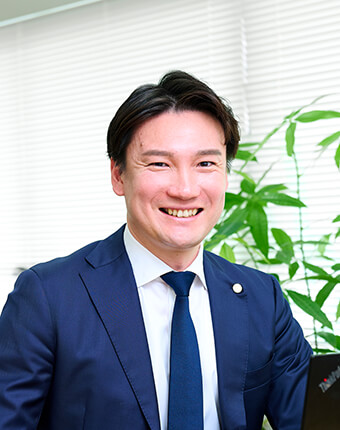
| August 2018 | Established “Yuda Administrative Scrivener Office,” specializing in visa applications and naturalization applications |
|---|---|
| April 2022 | Incorporated the private office as “Touch Immigration Law Firm” |
| Areas of Expertise | Foreign nationals’ statuses of residence and naturalization applications Specializes in foreign national visa-related matters and handles more than 1,000 consultations annually |
| Seminar Experience | Numerous seminars, including the International Administrative Scrivener Training Course, Toda City International Exchange Foundation, Saitama Japanese Language Network, Administrative Scrivener TOP 10% Club, and work visa training seminars for administrative scriveners |
| Operated Websites | Touch Immigration Law Firm International Marriage & Spouse Visa Support Center Naturalization Application Support Center Work Visa Support Center Permanent Resident Visa Support Center Business Manager Visa Support Center U.S. Visa Support Center Visa Support Center |
For a smooth application, start with a free consultation