Language
 永住申請お役立ちコラム

Permanent Residence Applications with an Annual Income Below 3 Million Yen
- 2026年05月15日
Full Support for Japanese Permanent Residency Applications!

Operated by: Touch Immigration Law Firm


目次
The Spouse or Child of Permanent Resident visa is a visa for the spouse of someone married to a Permanent Resident. In addition, children of Permanent Residents born in Japan may also obtain it. The Spouse or Child of Permanent Resident visa has no restrictions on residence activities and no employment restrictions, making it a visa under which one can act relatively freely.
However, if the holder is bereaved of or divorces the Permanent Resident, they become subject to revocation of the Status of Residence. For this reason, a certain number of holders of the Spouse or Child of Permanent Resident visa consider obtaining Permanent Residence themselves. This page explains the key points for obtaining Permanent Residence from the Spouse or Child of Permanent Resident visa.
The six requirements for obtaining Permanent Residence from the Spouse or Child of Permanent Resident visa are as follows.
As a general rule, an applicant for Permanent Residence must have resided continuously in Japan for 10 years or more. However, when applying for Permanent Residence from the Spouse or Child of Permanent Resident visa, if you have a substantive marriage of 3 years or more, you only need to have resided continuously in Japan for 1 year. In the case of the biological child of a Permanent Resident, residing continuously in Japan for 1 year or more satisfies this requirement.
However, even if you are married to a Permanent Resident, if you are actually living separately or otherwise have no substance to the marriage, your relationship will not be recognized as a substantive marriage of 3 years or more, and Permanent Residence cannot be obtained. If the marriage has been carried out only as a procedural formality in order to obtain the Spouse or Child of Permanent Resident visa, there is a high possibility that not only will Permanent Residence be denied, but even the renewal of the Spouse or Child of Permanent Resident visa will be denied.
That said, there is no problem if there is a reasonable explanation for not living together — for instance, if the husband is on a solo job assignment and lives apart for two-thirds of the month.
The approach to departures from Japan is the same as for Permanent Residence applications from other Statuses of Residence: if departures are frequent, the count toward the continuous 1-year requirement may be reset. A single departure of 90 days or more, or departures totaling more than half a year within one year, will be treated as a negative factor in the Permanent Residence review.
In particular, when applying for Permanent Residence from the Spouse or Child of Permanent Resident visa, one of the requirements is a substantive marriage of 3 years or more, so frequent departures will also be a negative factor from this standpoint.
The period of stay currently granted under the Spouse or Child of Permanent Resident Status of Residence must be the longest one. In other words, even if you hold the Spouse or Child of Permanent Resident Status of Residence, this requirement is not satisfied if the period of stay granted is only 1 year.
The periods of stay available under the Spouse or Child of Permanent Resident Status of Residence are 1 year, 3 years, or 5 years. While one might assume that a 5-year period is required, a period of stay of 3 years or more is sufficient to satisfy this requirement.
For holders of the Spouse or Child of Permanent Resident Status of Residence to obtain Permission for Permanent Residence, the household must have stable income. Low income increases the risk of denial, so please be careful.
There is no clearly stated minimum amount, but:
(Example: with 2 dependents, 200,000 yen × 2 + 3 million yen = 3.4 million yen)
The above income must also have been achieved continuously for the most recent 3 years, calculated from the date of the Permanent Residence application.
With dual-income couples on the rise, many people may be able to meet the annual income requirement on a household basis.
For dual-income couples where the spouse is claimed as a dependent: the judgment is generally based on the individual annual income of the dependent claimant. In other words, the part-time income of the spouse who is the dependent is not included.
For dual-income couples where the spouse is not claimed as a dependent: there is a high possibility that household annual income will be considered.
(Example: Permanent Resident husband’s annual income = 2.7 million yen, the wife’s annual income as Spouse of Permanent Resident = 2.5 million yen, giving a combined annual income of 5.2 million yen.)
The Permanent Resident side must meet the income requirement above. When the spouse of a Permanent Resident is a full-time homemaker, the spouse becomes a dependent of the Permanent Resident, so the Permanent Resident’s annual income must be 3 million yen + 200,000 yen = 3.2 million yen. If there are also children being supported, an additional 200,000 yen is required per child.
In addition, both the Permanent Resident and the spouse of the Permanent Resident are required to have properly fulfilled the public duties — pension, taxes, health insurance, etc. — described below.
If you are receiving public assistance and have become a burden on public funds, obtaining Permanent Residence will be difficult. The same applies when not the foreign national applying for Permanent Residence themselves, but a family member living with them, is receiving public assistance.
This means complying with the law and leading a life as a resident that is not socially criticized in daily life.
The review covers past imprisonment, fines, and traffic violations. If you have received imprisonment or a fine in the past, we recommend waiting a period of time after the date of disposition before applying. The length of time to wait varies depending on the severity of the sentence and the amount of the fine paid, but as a general guideline, it ranges from 5 to 10 years. For traffic violations, the treatment differs depending on whether an administrative penalty or a criminal penalty was imposed.
Minor violations such as failing to stop at a stop sign fall under administrative penalties, and a few such instances are generally not a problem. Drunk driving and serious speeding fall under criminal penalties, and if you have committed such an offense, we recommend waiting a period of time after the date of dispos
永住申請お役立ちコラム
永住申請お役立ちコラム
永住申請お役立ちコラム

永住申請お役立ちコラム

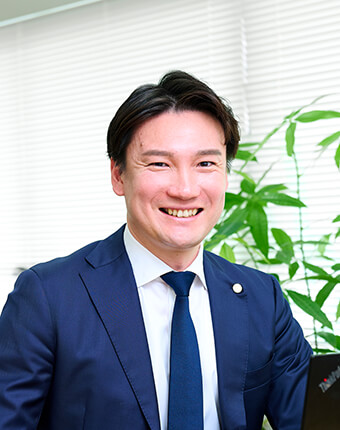
| August 2018 | Established “Yuda Administrative Scrivener Office,” specializing in visa applications and naturalization applications |
|---|---|
| April 2022 | Incorporated the private office as “Touch Immigration Law Firm” |
| Areas of Expertise | Foreign nationals’ statuses of residence and naturalization applications Specializes in foreign national visa-related matters and handles more than 1,000 consultations annually |
| Seminar Experience | Numerous seminars, including the International Administrative Scrivener Training Course, Toda City International Exchange Foundation, Saitama Japanese Language Network, Administrative Scrivener TOP 10% Club, and work visa training seminars for administrative scriveners |
| Operated Websites | Touch Immigration Law Firm International Marriage & Spouse Visa Support Center Naturalization Application Support Center Work Visa Support Center Permanent Resident Visa Support Center Business Manager Visa Support Center U.S. Visa Support Center Visa Support Center |
For a smooth application, start with a free consultation