

- 公開日:2026.04.30
- 最終更新日:2026.04.30

目次
- 1 What is the Highly Skilled Professional Points-Based System?
- 2 Benefits of the Point System for Aiming for a Permanent Resident Visa
- 3 How to Calculate Highly Skilled Professional Points
- 4 Requirements for Permanent Resident Visa Application (Highly Skilled Professional Route)
- 5 Highly Skilled Professional (ii) or Permanent Resident: Which is Better?
- 6 Flow and Required Documents for Permanent Resident Visa Application using the Highly Skilled Professional System
- 7 Please Consult with Experts Early Regarding Highly Skilled Professional Visas and Permanent Resident Visa Applications
What is the Highly Skilled Professional Points-Based System?
The Highly Skilled Professional points-based system is a system implemented since 2012 that provides preferential immigration and residency treatment to “Highly Skilled Foreign Professionals” through a point-based evaluation to promote their acceptance in Japan.
By granting preferential treatment in immigration and residency management when the total points reach 70, the system aims to promote the acceptance of highly skilled foreign professionals into our country.
What are the target “Highly Skilled Professionals”?
The “Highly Skilled Professional” status is divided into three categories: Advanced Academic Research Activities, Advanced Specialized/Technical Activities, and Advanced Business Management Activities. Points are assigned for items such as “academic background,” “professional career,” and “annual income” on a points evaluation table according to the characteristics of each category.
Below is a detailed explanation of each category.
Advanced Academic Research Activities: “Highly Skilled Professional (i)(a)”
Activities involving research, research guidance, or education based on a contract with a public or private organization in Japan. This includes university professors and similar roles.
The corresponding general visas are mainly “Professor,” “Researcher,” and “Instructor.”
Advanced Specialized/Technical Activities: “Highly Skilled Professional (i)(b)”
Activities involving work that requires knowledge or skills in the fields of natural sciences or humanities based on a contract with a public or private organization in Japan.
Basically, those who are not researchers or business managers but wish to obtain the Highly Skilled Professional status will typically acquire this “Highly Skilled Professional (i)(b).”
The corresponding general visas are mainly “Engineer / Specialist in Humanities / International Services,” “Intra-company Transferee,” “Legal/Accounting Services,” “Medical Services,” etc.
Advanced Business Management Activities: “Highly Skilled Professional (i)(c)”
Activities involving the operation or management of a business in a public or private organization in Japan. This includes business executives and similar roles.
The corresponding general visas are mainly “Business Manager” and “Legal/Accounting Services.”
Furthermore, since there is no one-to-one correspondence between Highly Skilled Professional status and other general visas, a single activity may fall under two or more categories of Highly Skilled Professional.
For example, if a foreign business manager requires specialized technical or humanities knowledge for the operation of their company, they may qualify for both Highly Skilled Professional (i)(b) and (i)(c). In such cases, the points can be calculated using the evaluation table most advantageous to the individual.
The Newly Introduced “Special Highly Skilled Professional System (J-Skip)”
In April 2023, the Special Highly Skilled Professional System (J-Skip) was introduced. Individuals with academic or professional backgrounds and annual income above a certain level are now recognized as “Special Highly Skilled Professionals,” receiving expanded preferential measures compared to general “Highly Skilled Professional” foreigners.
The requirements for “Special Highly Skilled Professionals” vary by category. If the requirements are met, a “Highly Skilled Professional” visa can be granted without the need to calculate points.
Foreigners involved in Advanced Academic Research or Advanced Specialized/Technical Activities fall under “Special Highly Skilled Professionals” if they meet the following two requirements:
- Annual income of 20 million yen or more.
- Possession of a master’s degree or higher, or 10 years or more of practical experience related to the business.
Foreigners involved in Advanced Business Management Activities fall under “Special Highly Skilled Professionals” if they meet the following two requirements:
- Annual income of 40 million yen or more.
- 10 years or more of practical experience in business operation or management.
Benefits of the Point System for Aiming for a Permanent Resident Visa
Permanent Residency Applications Possible in 1 or 3 Years for “Highly Skilled Professionals”
Normally, to apply for permanent residency, it is necessary to live in Japan for 10 consecutive years, with at least the most recent 5 years spent under a work visa. However, as part of the preferential measures for highly skilled professionals, the residency year requirement for permanent residency applications has been significantly relaxed.
Specifically, those with 70 or more points can apply for permanent residency after living in Japan for 3 consecutive years. Furthermore, for those with 80 or more points or those qualifying as “Special Highly Skilled Professionals,” the requirement is further relaxed to 1 year.
Additionally, foreigners who wish to use the Highly Skilled Professional system to shorten the period for permanent residency applications do not necessarily need to reside in Japan under a “Highly Skilled Professional” visa; even while residing under other work visas, if they possess 70 or more points at the current time and 3 years prior, they can apply for permanent residency after the shortened period. The same applies if they have 80 or more points or qualify as a “Special Highly Skilled Professional” at the current time and 1 year prior.
Preferential Treatment for Highly Skilled Professionals (Stability of Residence, Spouse Employment, etc.)
In addition to the relaxation of the required period of stay for permanent residency applications, there are further preferential measures for highly skilled professionals, such as the following:
Granting of a Uniform “5-year” Visa Period
While regular work visas are initially granted for 3 years or 1 year, “Highly Skilled Professional” visas are granted for the maximum 5-year period under the Immigration Control Act from the start. This significantly reduces the effort required for visa renewals.
Employment of Foreign Domestic Workers
Highly skilled foreign professionals with a household income of 10 million yen or more who meet any of the following conditions can employ one foreign domestic worker:
- Continuing to employ one domestic worker who was employed before coming to Japan.
- Having a child under the age of 13, or the spouse being unable to perform daily housework due to illness or both parents working.
- Being a financial professional involved in the investment management business, etc. (Under this condition, households with an annual income of 30 million yen or more can employ two people).
Bringing Parents to Japan
Normally, there is no visa for the parents of working foreigners to reside in Japan, but in the case of Highly Skilled Professionals, parents can be brought over if the following conditions are met:
- Household annual income of 8 million yen or more.
- Having a child under the age of 7, or if the professional or their spouse is pregnant.
Only the parents of either the professional or their spouse can be brought over.
Relaxation of Employment Requirements for Spouses
Generally, if the spouse of a working foreigner wishes to work more than 28 hours per week, specific academic or professional backgrounds are required. However, if the spouse of a Highly Skilled Professional wishes to engage in work activities under “Researcher,” “Instructor,” “Engineer / Specialist in Humanities / International Services,” or “Entertainer” visas, the academic and professional requirements are waived. Furthermore, for the spouse of a Special Highly Skilled Professional, this also applies to “Professor,” “Artist,” “Religious Activities,” “Journalist,” or “Skilled Labor.”
Permission for Multiple Residency Activities
Highly skilled foreign professionals can personally operate a related business in addition to their main work activities without obtaining separate permission to engage in activity other than that permitted under the status of residence previously granted.
Priority Processing of Entry and Residency Procedures
Applications for Certificate of Eligibility, change of status, and renewal for highly skilled professionals are processed preferentially and quickly.
Priority Immigration Screening at Airports (Limited to Special Highly Skilled Professionals)
In the case of Special Highly Skilled Professionals, they can use VIP priority lanes during immigration screening at major airports such as Haneda, Narita, and Kansai.
How to Calculate Highly Skilled Professional Points
Since the evaluation criteria for points differ for each of the three categories, you can calculate them using the Excel calculation table available on the Ministry of Justice website below.
Ministry of Justice Website
https://www.moj.go.jp/isa/applications/resources/newimmiact_3_evaluate_index.html
Requirements for Permanent Resident Visa Application (Highly Skilled Professional Route)
3 Years Elapsed with 70+ Points, 1 Year Elapsed with 80+ Points or Special Highly Skilled Status
As mentioned above, foreigners with 70 or more points need to have lived in Japan for 3 consecutive years.
Additionally, those with 80 or more points or Special Highly Skilled Professionals need to have lived in Japan for 1 year.
Note that it is not necessary to maintain 70 or 80+ points throughout the entire period. If the points are sufficient at the start of the period and at the time of application, the requirement is met.
Furthermore, since it is necessary to live in Japan consecutively, even if a re-entry permit is obtained, staying outside Japan for a long period (generally 100 consecutive days or more than 6 months a year) may cause the consecutive stay period to be reset.
In such cases, if there is a rational reason for the departure, such as long-term overseas business trips by company order or returning home for childbirth, it may be judged as acceptable. Therefore, it is important to provide a proper explanation in the statement of reason at the time of the permanent residency application.
Note that regardless of the duration of the departure, if you complete the overseas move procedure at the city office and no longer have an address in Japan, the consecutive stay period will be reset at that point.
Compliance with Tax and Social Insurance, and Confirmation of Good Conduct
It is necessary to fulfill various public obligations such as taxes, pensions, and insurance. In a permanent residency application, the following items are confirmed:
|
Item |
Highly Skilled Professional Points: 70+ |
Highly Skilled Professional Points: 80+ Special Highly Skilled Professional |
|---|---|---|
|
Residence Tax |
Past 3 years |
Past 1 year |
|
Pension / Health Insurance |
||
|
National Tax |
Whether there are no unpaid records in the past |
|
Additionally, not only must they be fully paid, but strict adherence to payment deadlines during the aforementioned periods is a condition for obtaining permanent residency. If there are delinquencies, after fully paying the delinquent amount, Immigration may require that the aforementioned period pass again with taxes paid on time during that period.
It is important not to have received fines or imprisonment. If you have received such sentences in the past, a certain period (about 5 to 10 years) must have passed since the date of disposition.
The number of traffic violations is also checked during the screening. Those who have received a license suspension should be aware that permanent residency will not be granted for at least 5 years from the date of the suspension.
Income and Stability of Livelihood are Required
Permanent residency applicants are required to not be a public burden in daily life and to be expected to have a stable life in the future in view of their assets or skills. It is necessary to prove that they are earning income continuously.
Generally, an annual income of 3 million yen or more is used as a guideline, and if there are dependents, an additional 200,000 to 300,000 yen per dependent is required. Since an annual income of 3 million yen or more is a requirement to become a highly skilled professional, the requirement for a livelihood foundation is usually not an issue.
In addition, in the case of a business manager, the stability and continuity of the company they manage are also examined. If the company they manage has consecutive deficits, it may be considered a problem with the livelihood foundation.
Conditions for Applying with Family
Family members (spouse and children) may be able to apply for permanent residency simultaneously with the highly skilled foreign professional.
Generally, when a foreigner applies for permanent residency, they need to reside in Japan for 10 consecutive years or more. However, when a highly skilled foreign professional applies for a shortened period using the system, once permitted, the spouse and children gain the status of “Spouse or Child of a Permanent Resident,” thus shortening the required period of stay for them.
In this case, the requirement for the spouse when applying together with the highly skilled foreign professional is to have a marital relationship for 3 years or more with actual substance and to have resided in Japan for 1 consecutive year or more.
Note that “marriage with actual substance” mainly refers to the couple living together. If they are living apart without a justifiable reason (e.g., solo transfer, family care), it may not be recognized as a marriage with actual substance.
Children of highly skilled foreign professionals can apply together by residing in Japan for 1 consecutive year or more. Living together is not required.
Highly Skilled Professional (ii) or Permanent Resident: Which is Better?
What is “Highly Skilled Professional (ii)”?
“Highly Skilled Professional (ii)” is a visa that can be obtained by foreigners who have resided in Japan for 3 years or more (1 year for Special Highly Skilled Professionals) with a “Highly Skilled Professional (i)” visa. This visa, like “Permanent Resident,” has an indefinite period of stay.
Foreigners with this visa can engage in any of the three types of activities: “Advanced Academic Research,” “Advanced Specialized/Technical,” or “Advanced Business Management.” While engaging in these duties, they can also engage in activities corresponding to each work visa.
Pros and Cons of Highly Skilled Professional (ii) vs. Permanent Resident
Benefits of Permanent Resident
While a Permanent Resident is a status to stay in Japan based on that position, Highly Skilled Professional (ii) is strictly a visa for performing specialized work activities. Therefore, compared to a Permanent Resident who can also stay indefinitely, there are the following restrictions:
Grounds for Revocation of Status of Residence
In the case of a Permanent Resident, the status of residence will not be revoked unless a certain serious crime is committed. In contrast, for Highly Skilled Professional (ii) foreigners, in addition to crimes, the status of residence may be revoked if they are unemployed for more than 6 months.
Restrictions on Work Activities
Permanent Residents have no work restrictions and can engage in all occupations. In contrast, Highly Skilled Professional (ii) foreigners must primarily engage in the three types of work activities: “Advanced Academic Research,” “Advanced Specialized/Technical,” or “Advanced Business Management,” and any secondary work activities must also correspond to various work visas. Please note that violating this may result in deportation from Japan as an activity other than that permitted.
Benefits of Highly Skilled Professional (ii)
On the other hand, there are items permitted only for Highly Skilled Professional visas that are not granted to Permanent Residents. These are the employment of foreign domestic workers and bringing parents. As mentioned earlier, highly skilled foreign professionals who meet certain conditions are allowed these two items, but Permanent Residents cannot bring domestic workers or parents.
Furthermore, since the requirement for change to Highly Skilled Professional (ii) is simply having a residency history of 3 years or more (1 year for Special Highly Skilled Professionals) under Highly Skilled Professional (i), if you wish to bring your parents after changing to Permanent Resident status after staying for 3 years with 70+ points, you can change to Highly Skilled Professional (ii).
In addition, changing to Highly Skilled Professional (ii) is much faster than applying for permanent residency. According to the latest data published by Immigration, the average screening period for a change to Highly Skilled Professional (ii) is about 2 months, whereas the average screening period for a permanent residency application is over 8 months. Especially at the Tokyo Immigration Bureau, where there are many applications, you may need to wait for over a year.
Also, those whose period of stay expires while applying for permanent residency must apply for an extension of their period of stay in addition to the permanent residency application. If you stay in Japan past your expiration date without applying, you will be staying illegally, and of course, your current permanent residency application will be rejected, and you will be subject to deportation. In contrast, in the case of an application for change to Highly Skilled Professional (ii), you do not need to apply for an extension separately, and you can stay in Japan legally for an additional 2 months from the expiration date of your residence card. The results of the application will also be issued by the deadline for legal stay.
Flow and Required Documents for Permanent Resident Visa Application using the Highly Skilled Professional System
If you wish to apply for permanent residency using the Highly Skilled Professional system, you must go to the Immigration Bureau that has jurisdiction over your place of residence and submit the application documents at the counter.
Currently, procedures for many visas can be applied for online, but permanent residency applications still require going to the Immigration Bureau.
While waiting for the results of the screening, Immigration may request additional documents to be submitted.
Finally, when the result of the application is issued, you will go to the Immigration Bureau counter again and receive a new residence card.
Common Documents such as Permanent Residency Application Form, Certificate of Residence, and Taxation Certificate
The following are common documents for each type of permanent residency application, including for Highly Skilled Professionals.
Permanent Residency Application Form in the format specified by the Ministry of Justice
- Certificate of residence for all members of the applicant’s household
- Taxation certificate for all members of the household
- Tax payment certificate for all members of the household
- Pension records and health insurance cards for all members of the household
In the case of the Highly Skilled Professional system, the confirmation period for tax payment certificates, pension records, and health insurance payment records is 3 years or 1 year, as mentioned above.
- If the applicant is a company manager, documents such as tax, social insurance, and financial statements of the company they manage are also required.
- A letter of guarantee by one Japanese national or permanent resident, and a copy of the guarantor’s identification document.
- If you currently hold a “Highly Skilled Professional” visa, a statement of reason for the permanent residency application is not required, but if you are applying using the Highly Skilled Professional system from a work visa other than “Highly Skilled Professional,” a statement of reason is required (except when you are the spouse of a Japanese national or permanent resident, etc.).
Submission of Point Evaluation Table and Supporting Documents
The following documents are also required to prove that the point requirements are met:
- Highly Skilled Professional point evaluation table based on current standards
- Highly Skilled Professional point evaluation table based on standards from 3 years ago or 1 year ago
- Documents supporting each point item
- Graduation certificate
- Various professional licenses and qualifications
- JLPT (Japanese-Language Proficiency Test) passing certificate
- Certificate of professional career
- Documents proving income
- Documents related to other items
Please Consult with Experts Early Regarding Highly Skilled Professional Visas and Permanent Resident Visa Applications
Touch Immigration Law Firm provides comprehensive support for Highly Skilled Professional visas and applications for permanent residency (permanent residency status).
We will confirm whether you meet the requirements for the “Highly Skilled Professional” or “Permanent Resident” status, and if you do, we can prepare all the necessary documents.
Even if you do not meet the requirements, we will provide advice on how to obtain other work visas or permanent residency.
The required documents for the Highly Skilled Professional system can be vast and complex, but with the support of our firm, it will be possible to proceed with the procedures smoothly.
If you are considering applying for a Highly Skilled Professional work visa or a permanent residency application, please consult with “Touch Immigration Law Firm.”
この記事の監修者
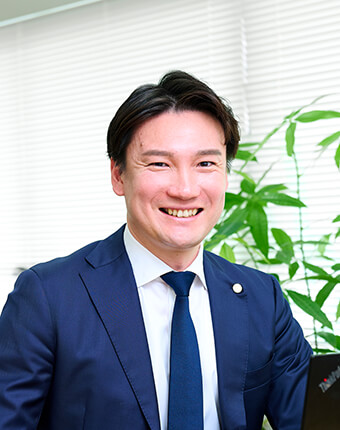
- 行政書士法人タッチ 代表行政書士 湯田 一輝
-
2018年8月 ビザ申請・帰化申請専門の「ゆだ行政書士事務所」設立 2022年4月 個人事務所を行政書士法人化「行政書士法人タッチ」 専門分野 外国人在留資格、帰化申請
外国人ビザ関係を専門とし、年間1000件以上の相談に対応セミナー実績 国際行政書士養成講座、公益財団法人戸田市国際交流会、埼玉県日本語ネットワーク、行政書士TOP10%クラブ、行政書士向け就労ビザ講習会など多数 運営サイト 行政書士法人タッチ
国際結婚&配偶者ビザサポートセンター
帰化申請サポートセンター
就労ビザサポートセンター
永住ビザサポートセンター
経営管理ビザサポートセンター
アメリカビザサポートセンター
ビザサポートセンター


