


To obtain a Business Manager Visa, it is necessary to secure an independent office to operate the business in question.
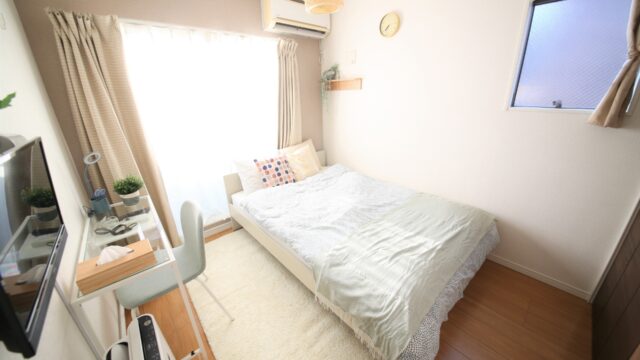
When a Japanese national establishes a company and sets up an office, there are generally no particular restrictions, and it is possible to freely use a “home office.” However, when a foreign national establishes a company and applies for a Business Manager Visa, certain restrictions apply.
In particular, for applications submitted on or after October 16, 2025 (※), the screening process, including office requirements, has been significantly tightened, so careful attention is required.
(※) Due to legal revisions effective October 16, 2025, in addition to the previous requirements (such as a capital of 5 million yen), new requirements have been introduced, including “employment of at least one full-time employee,” “capital of 30 million yen,” “at least 3 years of management experience or a related degree,” and “Japanese language ability (applicant or full-time employee).”
Business Manager Visa Office Requirements
- An independent office in Japan for operating the business
- An office capable of supporting continuous business operations
To obtain a Business Manager Visa, it is necessary to meet the above two requirements.
In other words, under ①, virtual offices and shared offices (without independent partitions) are not recognized as independent offices. Under ②, using short-term monthly rental spaces or easily removable setups such as food stalls will not be recognized as supporting continuous business operations.
【Key Points of the 2025 Revision】
Furthermore, as proof that the business can be operated continuously under requirement ②, for applications submitted on or after October 16, 2025, “employment of at least one full-time employee” has become mandatory.
As a result, an office space sufficient for only one manager is no longer adequate. It is now required to secure “sufficient space and facilities for both the manager and at least one employed full-time staff member to carry out their duties”.
Based on this, the following summarizes key points by office type.
| Office Type | Eligibility | Explanation |
| Independent office (standard rental office) |
○ | Leasing a clearly separated space is acceptable, and contracts are typically for one year or longer. However, it must have adequate space for both the manager and at least one full-time employee to perform their duties. |
| Home office (apartment, etc.) |
× | In principle, a home office does not meet the requirements for a Business Manager Visa. The Ministry of Justice’s new guidelines explicitly state that it is “generally not permitted.” |
| Home office (detached house) |
× | Previously, it might have been accepted if clearly separated (e.g., office on the first floor and residence on the second), but following the legal revision, it is now “generally not permitted.” |
| Rental office (private room type) |
○ | Permissible if an independent space is secured. However, due to the October 2025 revision requiring employment of a full-time employee, small private rooms designed for only one person (e.g., single-person booths) are highly likely to be rejected if they cannot accommodate staff workspace. |
| Virtual office | × | A virtual office does not provide an independent physical space and therefore does not meet the requirements for a Business Manager Visa. |
| Subleased office (subletting) |
△ | If the lease agreement includes a prohibition on subleasing, it is not permitted. Therefore, it is essential to review the lease terms when registering a subleased office. |
| Food stall / kitchen car | × | These are not recognized as supporting continuous business operations. |
Important Points When Signing an Office Lease
In addition to securing a property that qualifies as an office as described above, the following two points must be considered when signing a lease for an office or store.
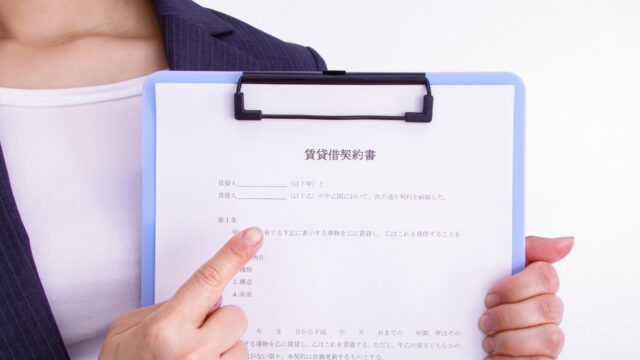
- The lease contract must be under the “company name”
- The purpose of use must be specified as “business use”
If the contract is under an individual’s name or specifies residential use, it will not be recognized as properly securing an office.
Therefore, it is important to pay attention to the above two points when entering into a lease agreement for an office or store.
【Case Examples】Approved and Rejected Office Cases
Next, we introduce actual past cases where office spaces were approved and not approved.
(※The following examples are from before the 2025 revision, but they remain useful for understanding the basic principle that the “substance” of the business location is emphasized.)
Cases Recognized as Offices
Case 1
A applied for a change of status of residence to operate a privately owned restaurant in Japan. Although the lease agreement for the property listed the usage as “residential,” a special agreement with the landlord allowed its use as a “company office,” and it was recognized that a business location had been secured.
Case 2
B applied for a Certificate of Eligibility to engage in the import/export and processing sale of marine products in Japan. While the head office was located at an executive’s residence, a separate branch office was leased from a chamber of commerce, and it was recognized that a business location had been secured.
Cases Not Recognized as Offices
Case 3
C established a joint-stock company in Japan and applied for a Certificate of Eligibility to engage in a sales business. The office entrance was separate from the residential area, and a sign displaying the company name was installed. Office equipment such as computers, telephones, desks, and copiers was present, confirming business operations. As a result, it was recognized that a business location had been secured.
However, while such home-office arrangements might have been accepted previously, they are no longer permitted following the legal revision.
Case 4
D established a limited company in Japan and applied for an extension of period of stay to engage in its business management. Upon investigation, the location appeared to be D’s residence. There was no signage indicating a business location at the mailbox or entrance, and inside there was no equipment or facilities necessary for business operations. No payroll or attendance records for employees were found, and only everyday household items were present. Therefore, it was not recognized as a secured business location.
Case 5
E established a limited company in Japan and applied for a Certificate of Eligibility to operate as a general sales agent. The submitted materials suggested the business location was a residence. Upon investigation, it was a two-story apartment with no company signage at the mailbox or entrance.
Additionally, no office equipment was installed inside, and only ordinary household furnishings were present. Therefore, it was not recognized that a business location had been secured.
Case 6
F established a limited company in Japan and applied for a change of status of residence to operate a design company. The submitted documents showed that the office was not under the company’s or manager’s name, but under an employee’s name, and was used as that employee’s residence. Utility payments were also under the employee’s name, and there was no confirmation of the landlord’s consent for use other than residential purposes. Therefore, it was not recognized that a business location had been secured.
【Supplement Based on the 2025 Revision】
The above examples are from before the revision, and the emphasis on the “substance” of the business location remains unchanged.
However, after October 16, 2025, in addition to these factors, “employment of at least one full-time employee” and “securing space for that employee to work” will be mandatory requirements in the examination.
In particular, offices lacking substance as in Cases 4, 5, and 6, as well as home offices like Case 3 (even if separated), will generally not be accepted.