Language
永住申請お役立ちコラム
How Do You Obtain Permission for Permanent Residence? Requirements, Application Process, and Required Documents Explained
- 2026年05月19日
Full Support for Japanese Permanent Residency Applications!

Operated by: Touch Immigration Law Firm

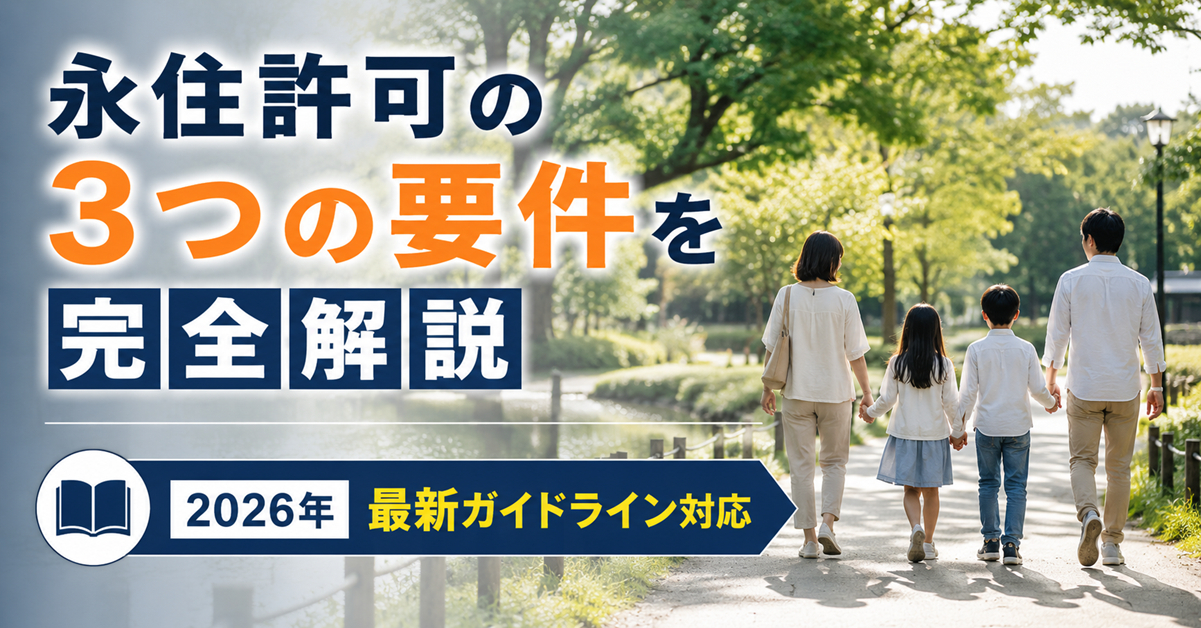
In recent years, Japan has adopted increasingly stringent measures regarding the acceptance of foreign nationals. Regulatory revisions affecting Business Manager visas, Engineer/Specialist in Humanities/International Services visas, naturalization, and permanent residency applications have been introduced one after another, resulting in higher screening standards. While public opinion often suggests that permanent residency approval is too lenient—or should be made stricter—the reality is that the Immigration Services Agency is already conducting extremely rigorous examinations in accordance with the law.
In this article, an administrative scrivener provides a comprehensive explanation of the three legal requirements for permanent residency applications based on the Immigration Services Agency Guidelines (revised on February 24, 2026). We will also discuss the amendments to residency-period requirements that will take effect on April 1, 2027, making this a must-read for anyone considering applying for permanent residency in Japan.
目次
The content of this article is also explained in detail through a video by Yuda, representative of Touch Immigration Law Firm. If you prefer learning through video rather than text, be sure to watch it as well.
First, let’s clarify what “Permanent Resident” means as a status of residence in Japan.
Permanent Resident is one of the statuses of residence defined under Japan’s Immigration Control and Refugee Recognition Act. It is categorized as a distinct status alongside others such as Engineer/Specialist in Humanities/International Services and Spouse of a Japanese National.
Permanent residency differs from other statuses of residence in two significant ways.
The first is that there is no limit on the period of stay. For example, Engineer/Specialist in Humanities/International Services visas must be renewed every 1, 3, or 5 years. Permanent residents are not subject to these renewal requirements. Once permanent residency is granted, the status itself remains valid indefinitely.
The second is that there are no restrictions on employment activities. Holders of Engineer/Specialist in Humanities/International Services visas are limited to professional work requiring a university-level background, while Family Stay visa holders may work only within the scope permitted by a work authorization. Permanent residents, by contrast, may work in any occupation and may also start their own businesses, just like Japanese nationals.
Because of these advantages, permanent residency provides one of the most stable foundations for life in Japan. For this reason, immigration authorities regard permanent residency screening as the “final stage” of immigration review and conduct examinations with great caution.
Permanent Resident Status Can Still Be Revoked
Unlike naturalization, obtaining permanent residency does not grant Japanese citizenship. As a result, permanent residents remain subject to the status revocation system and deportation provisions under immigration law. In other words, obtaining permanent residency does not guarantee immunity from immigration consequences. For details, please refer to our separate article, “All Cases in Which Permanent Resident Status Can Be Revoked.”
Under Article 22 of the Immigration Control and Refugee Recognition Act, applicants must satisfy three primary legal requirements to obtain permanent residency.
The first is the Good Conduct Requirement, the second is the Independent Livelihood Requirement, and the third is the National Interest Requirement. The following table provides a quick overview.
| Requirement | Description | In Simple Terms |
| ① Good Conduct Requirement | The applicant must demonstrate good conduct. | Lives in compliance with laws and regulations |
| ② Independent Livelihood Requirement | Possesses sufficient assets or skills to maintain an independent livelihood. | Can support oneself financially |
| ③ National Interest Requirement | The applicant’s permanent residence must be considered beneficial to Japan. | Benefits Japan’s national interests |
Let’s now examine each requirement in detail.
The first requirement is good conduct.
According to the official guidelines, this means “complying with laws and regulations and living a life that is not socially reprehensible as a resident”. Put simply, it means obeying the law and leading a respectable life.
Because this standard is somewhat abstract, we will explain three key categories that commonly become issues in practice.
The most straightforward case involves criminal punishment. If an individual has been sentenced to imprisonment, confinement, or a fine, they will generally be considered not to satisfy the good conduct requirement.
However, an important legal concept known as “extinction of penalties” applies.
💡 Extinction of Penalties (Article 34-2 of the Penal Code)
• Imprisonment or more severe punishment: extinguished after 10 years without receiving another fine or heavier penalty following completion or remission of the sentence
• Fine or lighter punishment: extinguished after 5 years without receiving another fine or heavier penalty following completion or remission of the sentence
• Exemption from punishment: extinguished after 2 years without receiving another fine or heavier penalty following finalization of the judgment
In other words, even if you received a fine in the past, it is legally treated as extinguished after five years. In cases involving suspended sentences, the penalty is generally treated as extinguished once the probationary period concludes successfully.
A common question in practice is: “I received a fine for speeding in the past. Can I still apply for permanent residency?” If more than 5 years have passed since the fine was imposed, the penalty may fall within the scope of extinction. However, this does not automatically guarantee approval, as immigration authorities will evaluate all relevant conduct-related factors comprehensively.
The second category concerns individuals who remain under protective measures pursuant to Japan’s Juvenile Act. As this applies only to a limited group of applicants, we will not discuss it in detail here.
The third category is actually the most common source of consultations. If an applicant repeatedly engages in unlawful behavior or conduct that disrupts public order and morals, they may be found not to satisfy the good conduct requirement.
Typical examples include the following four situations:
① Repeated traffic violations (particularly where a driver’s license suspension was imposed; permanent residency approval is generally difficult until at least 5 years have passed since the suspension date)
② Multiple incidents of shoplifting or similar offenses, even without a criminal conviction
③ International students or Family Stay visa holders working beyond the permitted scope of their work authorization (more than 28 hours per week)
④ Repeated minor legal violations of a similar nature
Particular attention should be paid to traffic violations and exceeding the limits of work authorization.
With respect to traffic violations, even minor offenses resulting in a blue traffic citation may affect eligibility if they occur frequently. As a practical guideline, three or more violations within the past five years should be regarded as a warning sign. If a driver’s license suspension has been imposed, obtaining permanent residency is generally difficult until at least 5 years have passed from the date of the suspension.
Exceeding the scope of work authorization—commonly referred to as overwork—is another frequent issue among international students and Family Stay visa holders. Evidence of working beyond the 28-hour weekly limit can significantly undermine a permanent residency application. While past violations cannot be erased, it is important to demonstrate subsequent compliance and provide a thorough explanation in a written statement.
The second requirement is possessing sufficient assets or skills to maintain an independent livelihood.
The guidelines define this as “not becoming a burden on public assistance in daily life and being expected to maintain a stable livelihood in the future based on one’s assets, skills, and other circumstances”.
Put more simply, applicants are expected to support themselves without relying on public assistance and demonstrate that they can continue to do so in the future. In practice, this generally means meeting certain income thresholds.
| Family Composition | Approximate Required Annual Income |
| Applicant Only (Single) | JPY 3.5 million or more |
| With Dependents | Approximately an additional JPY 200,000 per dependent |
| Example: Couple + Two Children (Family of Four) | JPY 3.5 million + JPY 200,000 × 3 = JPY 4.1 million or more |
For a single applicant, the practical benchmark is generally an annual income of at least 3.5 million yen. Although this figure is not officially published by the Immigration Services Agency, it is widely recognized in practice.
If the applicant has dependents, approximately 200,000 yen should be added for each dependent. For example, if the applicant supports a spouse and two children aged 12 and 6, and the spouse is a homemaker, the applicant would generally need an annual income of at least 4.1 million yen.
A Note Regarding Overseas Parents Claimed as Dependents
If you claim parents or other relatives living overseas as dependents, they are generally included when calculating the income requirement. While doing so may provide tax benefits, it can also raise the income threshold expected for a permanent residency application.
Another important point is determining how far back immigration authorities will review your income history. The review period varies depending on the applicant’s current status of residence and personal circumstances.
| Applicant Category | Review Period |
| General permanent residency applications, such as applications from work visas | Most recent 5 years |
| Spouse of a Japanese national or permanent resident | Most recent 3 years |
| Highly Skilled Professional with 70 points or more | Most recent 3 years |
| Highly Skilled Professional with 80 points or more / Special Highly Skilled Professional | Most recent 1 year |
For general permanent residency applications, such as those applying from work visas including Engineer/Specialist in Humanities/International Services, applicants must meet the annual income benchmark continuously for the most recent five years.
For applicants applying as the spouse of a Japanese national or permanent resident, this period is shortened to the most recent 3 years. The same applies to Highly Skilled Professionals with 70 points or more. Applicants with 80 points or more, or those who qualify as Special Highly Skilled Professionals, only need to satisfy the requirement for the most recent 1 year.
Therefore, if your income dropped significantly for just one year during the past 5 years, this may be evaluated negatively in a general application. However, for spouse visa holders or Highly Skilled Professionals, it may not be an issue if that year falls outside the applicable review period.
The third requirement, and the most important section of this article, is the National Interest Requirement.
The guidelines set out five criteria, labeled A, B, C, D, and E. We will examine each in order.
The first criterion is, as a general rule, continuous residence in Japan for 10 years or more.
However, there is an additional breakdown within this requirement. Of those 10 years, the applicant must have resided in Japan continuously for at least 5 years under a work-related status or a residence-based status. Note that among work-related statuses, Technical Intern Training and Specified Skilled Worker 1 are not counted toward this 5-year period.
In other words, simply spending 10 years in Japan solely as an international student does not make you eligible to apply for permanent residency. A typical path is 5 years as a student followed by 5 years on a work visa, totaling 10 years.
Here, the meaning of the word continuous is extremely important.
Cases Not Recognized as “Continuous” Residence
・Leaving Japan without obtaining a re-entry permit or special re-entry permitThe third point, days spent outside Japan, is especially easy to overlook for applicants who frequently travel overseas for business or return to their home country often to care for parents.
If there is a year in which you spent more than half the year abroad, generally around 180 days or more, that year may be considered a period in which you were not continuously residing in Japan. Without a reasonable explanation, the permanent residency application may become difficult.
In practice, these cases are very common. An effective response is to carefully explain the reasonable grounds for the departures and the applicant’s future plans in Japan in a written statement. Specifically, it is helpful to prepare a list of immigration records showing when, why, and how long the applicant stayed overseas, and to obtain documents from the employer or other relevant parties objectively showing that overseas business trips were necessary for work and that the applicant will continue to maintain their base of life in Japan.
The 10-year requirement has 8exception patterns that allow the required period of residence to be shortened depending on the applicant’s circumstances.
| No. | Eligible Person | Required Residence Period | Notes |
|---|---|---|---|
| 1 | Spouse of a Japanese national, permanent resident, or special permanent resident | 3 years of marriage + 1 year of residence | Biological children, etc. require 1 year of residence |
| 2 | Long-Term Resident | 5 years | Continuous residence |
| 3 | Refugee or person eligible for complementary protection | 5 years after recognition | Independent livelihood requirement is not required |
| 4 | Person who has contributed to Japan in diplomacy, society, economy, culture, etc. | 5 years | See contribution guidelines |
| 5 | Contributor within a regional revitalization plan area under Designated Activities No. 36 or 37 | 3 years | Continuous residence |
| 6 | Highly Skilled Professional with 70 points or more | 3 years | 70 points both on the application date and 3 years before |
| 7 | Highly Skilled Professional with 80 points or more | 1 year | 80 points both on the application date and 1 year before |
| 8 | Special Highly Skilled Professional under the relevant ministerial ordinance | 1 year | J-Skip applicable |
The most commonly used exceptions are (1) the spouse exception, (2) the Long-Term Resident exception, and (6)(7)(8) the Highly Skilled Professional-related exceptions.
The spouse exception applies to spouses of Japanese nationals or permanent residents. Applicants may apply if their marriage has continued for at least 3 years and they have resided in Japan continuously for at least 1 year. Children, meaning biological children of Japanese nationals or permanent residents, may apply after residing in Japan for at least 1 year.
Applicants with 70 points or more as Highly Skilled Professionals may apply after 3 years, while those with 80 points or more, or those who qualify as Special Highly Skilled Professionals, may apply after just 1 year. These are significant reductions. In particular, those who qualify under J-Skip, the Special Highly Skilled Professional system introduced in April 2023, face strict requirements for income, educational background, and work experience, but enjoy substantially relaxed permanent residency requirements.
Criterion “B” of the National Interest Requirement concerns the fulfillment of public obligations. It requires that the applicant has not received a fine, imprisonment, or similar penalty, and that the applicant has properly fulfilled obligations such as paying taxes, public pension contributions, public health insurance premiums, and notifications required under the Immigration Control Act.
The following note expressly stated in the guidelines is extremely important.
Important Note in the Guidelines
“Regarding the fulfillment of public obligations, even if taxes or contributions have been paid by the time of application, if they were not fulfilled within the original payment period, this will generally be evaluated negatively.”In other words, even if you later make a lump-sum retroactive payment, the fact that you did not pay by the deadline itself will be evaluated negatively. It is not enough to pay everything once you notice the issue; whether you paid on time is the decisive point, and this is now clearly stated in the guidelines.
To go one step further and explain the current state of practice, if there has been even one late payment during the review period, the application is currently almost always refused. Therefore, if you have any past late payments, we strongly recommend that you do not apply immediately. Instead, you should first build a clean record with no late payments during the applicable review period before applying. For example, if the most recent 5 years are reviewed, you should wait until 5 years have passed from the month in which the late payment occurred.
The review period for public obligations also varies depending on the applicant’s category.
| Applicant Category [Local Taxes] | Review Period |
| Biological child of a Japanese national or permanent resident, including special adoptees / Highly Skilled Professional with 80 points or more | Most recent 1 year |
| Spouse of a Japanese national or permanent resident / Highly Skilled Professional with 70 points or more / Regional revitalization plan | Most recent 3 years |
| Foreign nationals other than the above, such as general applications from work visas | Most recent 5 years |
| Applicant Category [Pension and Insurance] | Review Period |
| Biological child of a Japanese national or permanent resident, including special adoptees / Highly Skilled Professional with 80 points or more | Most recent 1 year |
| Foreign nationals other than the above | Most recent 2 years |
For local taxes, general applicants applying from work visas are reviewed for the most recent 5 years, Highly Skilled Professionals with 70 points for the most recent 3 years, and those with 80 points or more for the most recent 1 year. For pension and health insurance premiums, general applicants are reviewed for the most recent 2 years, while those with 80 points or more are reviewed for the most recent 1 year.
Extremely Important in Practice: All Co-residing Family Members Must Fulfill Public Obligations
In practice, it is necessary not only for the permanent residency applicant, but also for all co-residing family members, including Japanese family members, to have properly fulfilled their public obligations. Even if the applicant has paid everything perfectly, a spouse’s unpaid National Health Insurance premiums alone may lead to refusal. It is essential to prepare the situation of all family members before applying.This is the most important point we want readers to understand in this article.
Criterion “C” of the National Interest Requirement requires that the applicant currently resides in Japan under the longest period of stay prescribed in Appended Table 2 of the Enforcement Regulations of the Immigration Control Act for their current status of residence.
Simply put, for example, the Engineer/Specialist in Humanities/International Services visa has three possible periods of stay: 1 year, 3 years, and 5 years. As a general rule, the applicant must hold the “longest” period, meaning 5 years.
However, there is currently an extremely important transitional measure for applicants.
From April 1, 2027, a 5-year period of stay will generally be required
Under Note 1 of the current guidelines, revised on February 24, 2026,
✱ Until March 31, 2027, applicants holding a 3-year period of stay may still be deemed to satisfy the requirement and apply for permanent residency.
✱ From April 1, 2027, a 5-year period of stay will generally be required.
In other words, applicants currently holding a 3-year period of stay and considering permanent residency need to make a strategic decision: proceed with the application by March 31, 2027, or first renew to a 5-year period and then apply.
| Application Timing | Can You Apply for Permanent Residency with a 3-Year Period of Stay? |
| Until March 31, 2027 | ○ Application possible with a 3-year period of stay |
| From April 1, 2027 | × A 5-year period of stay is generally required |
The significance of this transitional measure is extremely important.
Currently, many people applying for permanent residency from work visas such as Engineer/Specialist in Humanities/International Services do so while holding a 3-year period of stay. In fact, nearly half of the permanent residency applications handled by our firm are filed by applicants holding a 3-year period of stay.
From April 1, 2027, however, a 5-year period of stay will generally be required. In the coming several months to 1 year, you should expect that the hurdle for permanent residency applications will rise by one level.
Therefore, if you currently hold a 3-year period of stay and are considering applying for permanent residency, we strongly recommend deciding your strategy now: proceed with the application by March 2027, or first renew to a 5-year period before applying.
Criterion “D” of the National Interest Requirement requires that the applicant, with respect to their current status of residence, complies with the landing permission criteria and other standards prescribed by Ministry of Justice ordinances. For most applicants, this is naturally satisfied if their current status of residence was lawfully obtained and renewed, so it usually does not become an issue.
The final criterion, “E,” requires that the applicant is not likely to be harmful from a public health perspective. This applies to individuals with Class I infectious diseases, Class II infectious diseases, designated infectious diseases, or new infectious diseases, as well as those with chronic addiction to narcotics, cannabis, opium, stimulants, and similar substances. This also usually does not become an issue.
We have now reviewed the three requirements for permanent residency in detail according to the guidelines. Let us summarize the key points once again.
The first is the Good Conduct Requirement. Applicants must not have repeated legal violations, traffic violations, or excessive work beyond the permitted scope of their status.
The second is the Independent Livelihood Requirement. A single applicant generally needs an annual income of at least 3.5 million yen, with an additional approximately 200,000 yen per dependent if they have family members. The review period varies by applicant category and may be the most recent 1, 3, or 5 years.
The third is the National Interest Requirement. As a general rule, 10 years of residence is required, although there are 8 exceptions. For public obligations, timely payment by the deadline is decisive, and retroactive payment after the fact will still be evaluated negatively. The point emphasized in this article—that from April 1, 2027, a 5-year period of stay will generally be required—is an essential issue for anyone currently considering a permanent residency application.
💡 Expert Comment
These three requirements are not assessed merely on a formal checklist basis. The immigration authorities make a comprehensive judgment that includes consistency among documents, the applicant’s own explanations, and coherence with past circumstances. Many cases that appear to satisfy the requirements are refused because they fail at this “comprehensive judgment” stage. If it is difficult to assess your own case, we recommend consulting a professional.
Please also see the other articles in our complete guide series on permanent residency applications.
Touch Immigration Law Firm offers free consultations for permanent residency applications. If you are unsure whether you meet the requirements, have a complex case, or find it difficult to assess your situation on your own, please feel free to contact us.
Please contact us anytime through the inquiry form on our website or by phone.
永住申請お役立ちコラム
永住申請お役立ちコラム
永住申請お役立ちコラム
永住申請お役立ちコラム

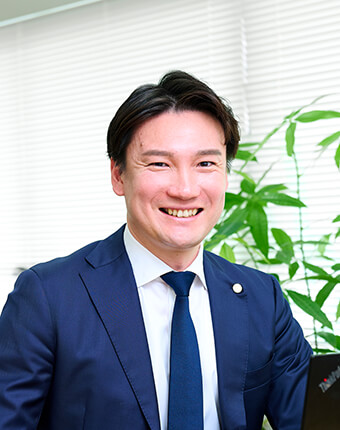
| August 2018 | Established “Yuda Administrative Scrivener Office,” specializing in visa applications and naturalization applications |
|---|---|
| April 2022 | Incorporated the private office as “Touch Immigration Law Firm” |
| Areas of Expertise | Foreign nationals’ statuses of residence and naturalization applications Specializes in foreign national visa-related matters and handles more than 1,000 consultations annually |
| Seminar Experience | Numerous seminars, including the International Administrative Scrivener Training Course, Toda City International Exchange Foundation, Saitama Japanese Language Network, Administrative Scrivener TOP 10% Club, and work visa training seminars for administrative scriveners |
| Operated Websites | Touch Immigration Law Firm International Marriage & Spouse Visa Support Center Naturalization Application Support Center Work Visa Support Center Permanent Resident Visa Support Center Business Manager Visa Support Center U.S. Visa Support Center Visa Support Center |
For a smooth application, start with a free consultation