Language
 永住申請お役立ちコラム

What Is the Highly Skilled Professional Points System? Its Connection to the Permanent Residence Visa Explained
- 2026年04月30日
Full Support for Japanese Permanent Residency Applications!

Operated by: Touch Immigration Law Firm


The statement of reasons is the only document among the required documents for a permanent residency application that is written in a free format. Precisely because there is no prescribed format, people often place excessive expectations on it, thinking, “If I write this well, I can get approval.” However, the actual role of the statement of reasons is not to serve as a “weapon to win approval,” but as an “organized explanation to avoid unnecessary denial.”
In this article, an administrative scrivener provides a complete explanation, covering the true role of the statement of reasons, its 6 structural elements, writing points for 4 different case types, and complete examples for all 4 patterns. If you are considering applying for permanent residency, please use this article as a reference when preparing your own statement of reasons.
目次
The content of this article is also explained in detail in a video by Yuda, the representative of Touch Immigration Law Firm. If you prefer learning through video rather than text, please watch it as well.
Before going into the main content, we will first explain the true role of the statement of reasons for permanent residency. This is the most important message in this article.
The statement of reasons is the only free-format document in a permanent residency application. Because there is no prescribed format, people often place excessive expectations on it, thinking, “If I write this well, I can get approval.” However, this point must be understood accurately.
Therefore, if there are negative factors such as late payments during the period under review, the most reliable approach is not to try to fix them with the statement of reasons, but to wait until you have built a clean track record with no negative factors before applying.
On the other hand, it is entirely possible for someone who otherwise satisfies the requirements and should be approved to be denied because the statement of reasons was written incorrectly.
In other words, the true role of the statement of reasons is——
The core message of the statement of reasons
It is not a “weapon to win approval,” but an “organized explanation to avoid unnecessary denial.” It is a document that protects applicants who should originally be approved, keeping them in the position of someone who can obtain approval.This article explains, in an organized way, how applicants who satisfy the requirements for approval should write a statement of reasons that does not work against them.
Please note that a statement of reasons is not mandatory for every permanent residency application. For applicants such as spouses of Japanese nationals, where submission is optional, it does not have to be submitted. On the other hand, for applications from work-related statuses of residence such as Engineer/Specialist in Humanities/International Services, it is practically a required document. As a guide, it should be 1 to 2 A4 pages, or about 1,000 to 2,000 Japanese characters.
A statement of reasons for permanent residency should be built around the following 6 structural elements. A simple example is provided for each element.
| No. | Structural element | Suggested length | What to write |
| ① | Self-introduction | 100〜200 characters | Name, nationality, date of arrival in Japan |
| ② | History from arrival in Japan to the present | 400〜600 characters | Education, work history, and changes in status of residence in chronological order |
| ③ | Current living situation | 200〜300 characters | Occupation, family, residence, and connection with the local community |
| ④ | Income, tax payments, and social insurance | 200〜300 characters | Specific figures consistent with objective documents |
| ⑤ | Reason for wishing to obtain permanent residency: most important | 400〜600 characters | Specific episodes are essential |
| ⑥ | Life plan after obtaining permanent residency | 200〜300 characters | Career plan and willingness to contribute to society |
Briefly write your name, nationality, and date of arrival in Japan.
✍ Example|①Self-introduction
My name is Nguyen Thi Hong, and I am from Vietnam. I came to Japan as an international student in April 2015 and have lived in Japan for 10 years and 7 months to date.Write your education, work history, and changes in status of residence in chronological order without omissions. This is usually the largest section of the statement of reasons.
✍ Example|②History
In April 2015, I enrolled in ○○ Japanese Language School in Tokyo and studied Japanese for two years. In April 2017, I entered the Faculty of Business Administration at ○○ University and graduated in March 2021. In April of the same year, I joined my current employer, ○○ Co., Ltd., as a new graduate and changed my status of residence to Engineer/Specialist in Humanities/International Services. Since joining the company, I have worked for 4 years and 7 months as a systems engineer in the IT department.Write specifically about your occupation, family structure, residence, and involvement with the local community.
✍ Example|③Current living situation
I currently live in Shinjuku-ku, Tokyo, with my wife and our eldest son, who is 2 years old. My son has attended a nearby licensed nursery school since April 2024 and is growing well in a Japanese-language environment. I also actively participate in neighborhood association activities and help with local cleanup activities and the operation of the summer festival.Write your annual income, resident tax payment status, and pension and health insurance enrollment status in a way that is consistent with objective documents.
✍ Example|④Income, tax payments, and social insurance
My current annual income is 6.5 million yen. Resident tax is properly paid through special collection deducted from my salary, and I have had no unpaid taxes over the past five years. I have been continuously enrolled in social insurance, including Employees’ Pension Insurance and health insurance, since joining the company, and there have been no delays in payment.This is the core of the statement of reasons. Be careful: if you only use abstract expressions, it may work against you because the necessity of permanent residency will not be conveyed. Simply saying “I like Japan” or “I want to live a stable life in Japan” does not explain why permanent residency is necessary rather than a temporary stay. Be sure to include specific episodes. Details are explained by 4 case types in Chapter 3.
Write how you plan to live after obtaining permanent residency and how you will contribute to Japanese society.
✍ Example|⑥Life plan after obtaining permanent residency
After receiving permanent residency, I intend to further develop my career as a systems engineer at my current company and aim to be promoted to a management position in the future. Regarding housing, I am also considering purchasing a home in Tokyo instead of continuing to rent. Including my child’s educational environment, my family and I intend to put down long-term roots in Japan. I will continue contributing to Japanese society through ongoing payment of taxes and social insurance premiums.What you should write in the statement of reasons is “information that cannot be understood from other documents”
Your date of arrival in Japan, annual income, and family structure can all be confirmed from objective documents such as your residence certificate and tax certificates. In fact, the immigration authorities have more accurate records than the applicant. What you should convey in the statement of reasons is information that cannot be read from objective documents, such as the motives and background behind coming to Japan or changing jobs, the circumstances behind numerical figures, reasonable explanations for past issues, and your future life plan.
From here, we will cover the central part of this article: writing points for 4 different case types.
What you should keep in mind again is that, in every case type, the role of the statement of reasons is to “convey, without contradictions or misunderstandings, that the applicant is someone who should originally be approved.” The basic approach is to organize and communicate the facts showing that the requirements are met.
Complete examples for each case type are provided in Chapter 5 of this article. Here, we will show the key points to emphasize, together with excerpts from the examples.
| No. | Case type | Points to emphasize |
| ① | From a work visa to permanent residency | Years of service, professional nature of duties, consistency of career |
| ② | From spouse of a Japanese national to permanent residency | Genuine marital life and the family’s life base being in Japan |
| ③ | From sole proprietor to permanent residency | Business stability, continuous clients, future business plans |
| ④ | Permanent residency with 70 points as a Highly Skilled Professional | Contribution in a specialized field, research achievements, continuous career |
This is the most common case type. What you should emphasize is your years of service, professional nature of your duties, and consistency of your career at the same company. Please see the example below.
✍ Example|Case type ① From a work visa to permanent residency (excerpt)
In April 2021, I joined ○○ Co., Ltd. as a new graduate and have worked as a systems engineer in the IT department for 4 years and 7 months to date. Since joining the company, I have consistently been involved in the design and development of core systems for financial institutions using Java and the Spring Framework. Since 2023, I have managed three members as a sub-leader.
My annual income has also increased from 4 million yen at the time of joining the company to 6.5 million yen at present, and I have continuously received evaluations that reflect my duties and achievements. Because this field requires a high level of expertise, I wish to build a long-term career in this field and contribute to the development of Japan’s IT industry.
This is a case where the applicant applies under the special rule of 3 years of marriage plus 1 year of residence. What should be emphasized is a genuine marital life and the fact that the family’s life base is entirely in Japan.
✍ Example|Case type ② From spouse of a Japanese national to permanent residency (excerpt)
My husband, Taro Yamada, was born in Tokyo and currently works at a bank in Tokyo. We married in Vietnam in August 2022 and have now been married for 3 years and 4 months. We have continued living together since our marriage and share household chores and household finances in our daily life.
Our eldest son, Taro, who is 2 years old, has attended a nearby licensed nursery school since April 2024 and is growing well in a Japanese-language environment. We intend to continue living in Japan as a family of three, and our son is also expected to attend elementary and junior high school in Japan. Our family’s life base is entirely in Japan, and we do not foresee any possibility of changing this base in the future.
Compared with company employees, this case type makes it harder to convey income stability. You should specifically show, with numbers, the number of continuous clients, trends in recent business income, tax payment status, and future business plans.
✍ Example|Case type ③ From sole proprietor to permanent residency (excerpt)
In 2018, I became independent as a sole proprietor and have operated my business for 7 years to date, mainly providing commissioned web system development. I have 18 continuous clients, primarily small and medium-sized companies in Japan, which allows me to secure stable monthly income.
My declared income over the past five years has remained stable between 4.5 million yen and 5 million yen, and there are no unpaid income tax or consumption tax amounts. Within the next three years, I intend to incorporate my business and contribute to Japanese society through greater employment and tax payments.
This is a case using the preferential system that allows an applicant with 70 or more Highly Skilled Professional points to apply for permanent residency after 3 years of residence. You should emphasize your degree of contribution in your specialized field, objective achievements such as research results and patents, and continuous career.
✍ Example|Case type ④ Permanent residency with 70 points as a Highly Skilled Professional (excerpt)
I currently work as a researcher in AI and machine learning at the Research and Development Division of ○○ Co., Ltd. My Highly Skilled Professional points are 75 as of the application date, and I also had 70 points in 2022, three years ago, satisfying the special requirements for a permanent residency application.
While in Japan, I have published five peer-reviewed international papers and filed three patent applications. Because this field does not produce results through short-term research, I wish to continue my research in Japan over the long term as my life’s work, and therefore I am applying for permanent residency. Going forward, I also intend to focus on training young researchers and contributing to the development of Japan’s AI research field.
Here are 3 things you must absolutely avoid in your statement of reasons.
| No. | What not to do | Why it is a problem |
| ① | Using AI-generated text as-is | It lacks specific episodes and feels like a template |
| ② | Copying and pasting examples from the internet | Immigration officers have seen the same examples, and it will be obvious immediately |
| ③ | Exaggerations or false statements that differ from the facts | They will inevitably be discovered when checked against objective documents |
Using text generated by AI tools such as ChatGPT as-is. Even if an AI-generated statement of reasons is grammatically correct, it lacks specific episodes and emotional nuance, making it feel strongly like a template. It is fine to use it as a starting draft, but be sure to rewrite it in your own words.
Copying and pasting examples from the internet as-is. This article also introduces examples, but please use them as references for structure and replace them with your own background and episodes.
Exaggerations or false statements that differ from the facts, such as inflating your annual income or years of employment. Such false statements will inevitably be discovered when checked against objective documents, and they can become a serious issue affecting your entire status of residence as a false application.
From here, we provide complete examples for the 4 case types introduced in this article. Please use them as references when preparing your own statement of reasons.
Before using these examples
Please use these only as references for structure, and customize them by replacing the content with your own background and episodes. Copying and pasting is strictly not recommended. See Chapter 4, NG example ②.Assumed profile
○○ nationality, 35 years old, male, 12 years in Japan, graduate school graduate, working at an IT company, annual income of 5.5 million yen, single✍ Example|Case type ① From a work visa to permanent residency — Complete example
To the Minister of Justice
Statement of Reasons
Reiwa 8, Month 〇, Day 〇 Name: ○○ ○○(YAMADA TARO)
My name is ○○○○, and I am a national of ○○. In applying for the status of residence of “Permanent Resident,” I would like to explain my background to date and the reasons for my application.
Background from arrival in Japan to the present
After graduating from the Department of Computer Science at ○○ University in my home country, I came to Japan to study in April 2014. The reason I had a strong interest in Japan was that, after being exposed to the high level of Japanese software technology in my home country, I developed a strong desire to grow as an engineer in this country.
After arriving in Japan, I first studied Japanese for one year at ○○ Japanese Language School, and then entered the Graduate School of Information Engineering at ○○ University. I completed the graduate program in March 2018 and joined ○○ Co., Ltd. as an engineer in April of the same year. My status of residence was changed from Student to Engineer/Specialist in Humanities/International Services.
Since joining the company, I have worked for seven years to date in the ○○ Business Division, mainly engaged in the design and development of systems for financial institutions. In 2021, I was promoted to team leader, and I currently manage five members.
Current living situation
I currently live in a rental apartment in ○○-ku, Tokyo. My workplace is about 30 minutes away by train. On weekdays, I work from 9 a.m. to 7 p.m., and on weekends, I participate in volunteer activities supporting Japanese language learning at the nearby ○○ Community Center. I also have many Japanese friends, and on holidays we enjoy hiking and meals together. I live a life deeply integrated into Japanese society.
Income, tax payments, and social insurance status
My current annual income is 5.5 million yen, and I have paid resident tax by the due date in every period over the past five years. I have been continuously enrolled in social insurance, including Employees’ Pension Insurance and health insurance, since joining the company, and the premiums are properly deducted from my salary every month. Over the past five years, there have been no delays or unpaid amounts. I have attached my tax certificates and copies of my pension records for your review.
Reason for wishing to obtain permanent residency
There are three main reasons why I wish to obtain permanent residency in Japan.
First, through 12 years of living in Japan, I have developed a deep attachment to this country’s society and culture. When I first arrived, I sometimes struggled with language barriers and cultural differences, but during graduate school I received warm guidance from my laboratory colleagues and academic supervisor, and at work I have learned a great deal from my supervisors and colleagues. Japan has now become my “second home.”
Second, I have a strong desire to develop my current career in Japan over the long term. Japan’s financial systems industry has a high technological standard, and I am convinced that it is a place where I can make long-term contributions by applying my expertise.
Third, my ties with Japanese society have deepened. Through my workplace, local volunteer activities, and friendships, I truly feel that my life base is entirely in Japan.
Life plan after obtaining permanent residency
If I am granted permanent residency, I intend to fulfill my responsibilities as a member of Japanese society even more than before. In my work, I will contribute over the long term to the development of Japan’s financial systems industry as an engineer. In the community, I will continue volunteer activities as a bridge between foreign residents and Japanese people. In addition to continuing to pay taxes and social insurance premiums, I will comply with Japanese laws and regulations and sincerely strive to become a model permanent resident.
For the reasons stated above, I hereby apply for the status of residence of “Permanent Resident.” I respectfully ask for your approval.
SincerelyAssumed profile
○○ nationality, 32 years old, female, 5 years in Japan, married for 3 years, homemaker, spouse is a Japanese company employee✍ Example|Case type ② From spouse of a Japanese national to permanent residency — Complete example
To the Minister of Justice
Statement of Reasons
Reiwa 8, Month 〇, Day 〇 Name: ○○ ○○(LEE MIN)
My name is ○○○○, and I am a national of ○○. In applying for the status of residence of “Permanent Resident,” I would like to explain my background to date and the reasons for my application.
Background from arrival in Japan to the present
After graduating from ○○ University in my home country in 2018, I worked for a trading company in my home country for two years. During that time, I visited Japan on a business trip and met my current husband, Taro Yamada. After dating, we married in my home country in December 2020.
After our marriage, we decided to establish our home in Japan due to my husband’s work, and I came to Japan in March 2021 with the status of residence of Spouse or Child of Japanese National. After arriving in Japan, I attended a Japanese language school for six months, and I now have sufficient Japanese ability for daily conversation.
Current living situation
I currently live with my husband and our eldest son, who is 2 years old, in a detached house in ○○ City, Kanagawa Prefecture, owned by my husband. My husband is a company employee working for a manufacturer in Tokyo, and I am a homemaker focusing on housework and childcare.
In the local community, I have built a network of other mothers through the nursery school my son attends, and I also actively participate in neighborhood association events. My parents-in-law also live in Kanagawa Prefecture, and we have close family interactions, such as having meals together once or twice a month.
Income, tax payments, and social insurance status
I am a homemaker and do not have personal income, but my husband’s annual income is 6.5 million yen, and our household finances are stable. Resident tax is collected specially from my husband’s salary, and there have been no unpaid amounts over the past five years. I am supported by my husband and am continuously enrolled in health insurance as his dependent under the Japan Health Insurance Association. For pension, I have completed registration as a Category III insured person.
Reason for wishing to obtain permanent residency
My wish to obtain permanent residency in Japan is based on my clear intention to build my family’s future in Japan.
My husband was born and raised in Japan, and his parents also live in Japan. Our son is already 2 years old, attends a nursery school in Japan, and spends his daily life in Japanese. We plan for him to receive all of his future education, including kindergarten, elementary school, and junior high school, in Japan. Our entire family’s life base is completely in Japan, and we do not foresee changing this in the future.
Also, through five years of living in Japan, I myself have developed a deep attachment to Japanese society and culture. In particular, through interactions with other mothers at the nursery school and with local residents at the neighborhood summer festival, my feeling that I want to continue living in this country for the rest of my life has grown stronger day by day.
Life plan after obtaining permanent residency
If I am granted permanent residency, I would like to return to work in the trading field when my son enters elementary school. I hope to use my native language and Japanese language skills in work that contributes to the overseas expansion of Japanese companies.
I will put down roots in Japan with my family, raise my son together with my husband to become a responsible member of Japanese society, and work hard so that I myself can contribute to Japanese society.
For the reasons stated above, I hereby apply for the status of residence of “Permanent Resident.” I respectfully ask for your approval.
SincerelyAssumed profile
○○ nationality, 40 years old, male, 15 years in Japan, former company employee now working as a sole proprietor in web design, declared income of 4.5 million yen✍ Example|Case type ③ From sole proprietor to permanent residency — Complete example
To the Minister of Justice
Statement of Reasons
Reiwa 8, Month 〇, Day 〇 Name: ○○ ○○(CHEN WEI)
My name is ○○○○, and I am a national of ○○. In applying for the status of residence of “Permanent Resident,” I would like to explain my background, the reasons for my application, and in particular my stable business operations as a sole proprietor.
Background from arrival in Japan to the present
After graduating from the Department of Design, Faculty of Fine Arts, at ○○ University in my home country in 2010, I came to Japan to study in April of the same year. I was attracted by the high level of Japanese design culture and wanted to study on-site in Japan.
After arriving in Japan, I studied web design for two years at ○○ Design Vocational School, and in 2012 I joined ○○ Design Co., Ltd. My status of residence was changed from Student to Engineer/Specialist in Humanities/International Services. After working for seven years at the company as a web designer and director, I became independent as a sole proprietor in 2019.
For the six years from independence to the present, I have operated my business under the trade name “○○Design,” focusing mainly on corporate website production, rebranding, and UI design.
Current living situation
I currently use a rental apartment in ○○-ku, Tokyo, as both my home and office, and I am single. I have ongoing projects with more than 20 clients, mainly small and medium-sized companies in Japan, and I operate my business stably.
Income, tax payments, and social insurance status
My declared income over the past five years has remained stable in the 4 million yen range. I file my tax return at the tax office by the deadline every year, and there are no unpaid income tax or consumption tax amounts. I also pay resident tax by ordinary collection each period by the due date. For National Pension and National Health Insurance, I have set up automatic bank transfers, and over the past five years there have been no delays or unpaid amounts. I have attached my tax certificates, pension records, and certificates of payment for National Health Insurance premiums for your review.
Reason for wishing to obtain permanent residency
First, I have a strong intention to develop over the long term the business foundation I have built in Japan as a sole proprietor. Including my time as a company employee, I have carefully built relationships one by one with Japanese clients for 13 years, and I have continued stable business operations even after becoming independent. I will continue developing my business on this foundation and contribute to Japan’s creative industry.
Second, I have a deep attachment to Japanese society and culture. Fifteen years have passed since I came to Japan, and Japanese aesthetics and sensitivity have become the foundation of my creative activities and part of my life itself.
Third, I also have a vision of incorporating my business in the future, employing Japanese designers, and contributing to the development of the industry. The status of residence of Permanent Resident will serve as the foundation for realizing this long-term plan.
Life plan after obtaining permanent residency
If I am granted permanent residency, I will continue to develop my current sole proprietorship while aiming to incorporate within three years. In addition to continuing to pay taxes and social insurance premiums, I will comply with Japanese laws and regulations and strive to become a model permanent resident who contributes to Japanese society through business.
For the reasons stated above, I hereby apply for the status of residence of “Permanent Resident.” I respectfully ask for your approval.
SincerelyAssumed profile
○○ nationality, 38 years old, male, 4 years in Japan, Highly Skilled Professional (i)(b), researcher at a major manufacturer, annual income of 9 million yen, 75 points✍ Example|Case type ④ Permanent residency with 70 points as a Highly Skilled Professional — Complete example
To the Minister of Justice
Statement of Reasons
Reiwa 8, Month 〇, Day 〇 Name: ○○ ○○(KIM SUNG)
My name is ○○○○, and I am a national of ○○. In applying for the status of residence of “Permanent Resident” under the special rule for those with 70 or more Highly Skilled Professional points, I would like to explain my background to date and the reasons for my application.
Background from arrival in Japan to the present
I majored in materials engineering in the doctoral program at ○○ University Graduate School in my home country and obtained my doctoral degree in 2018. During my doctoral studies, I conducted joint research with a Japanese corporate research institute, and through that connection I joined the Central Research Institute of ○○ Co., Ltd. as a researcher in April 2021, arriving in Japan at the same time under the status of residence of Highly Skilled Professional (i)(b).
Since joining the company, I have spent four years to date engaged in the research and development of next-generation battery materials. So far, I have filed three international patent applications and published five peer-reviewed academic papers.
Current living situation
I currently live in company housing in ○○ City, Kanagawa Prefecture, with my wife and our eldest son, who is 8 months old. My wife is also a national of ○○ and holds the status of residence of Dependent, while our son was born in Japan and holds the status of residence of Designated Activities.
Income, tax payments, and social insurance status
My current annual income is 9 million yen, and during the past three years, which is the review period for the 70-point Highly Skilled Professional requirement, I have paid resident tax by the due date in every period. I have been continuously enrolled in social insurance, including Employees’ Pension Insurance and health insurance, since joining the company. There are no recent delays or unpaid amounts.
Highly Skilled Professional points
My Highly Skilled Professional points are 75 as of the time of application, and I also had 70 points three years ago, satisfying the special requirements for a permanent residency application. Please refer to the attached points calculation table for details.
Reason for wishing to obtain permanent residency
My wish to obtain permanent residency in Japan is based on my clear intention to build a long-term career in Japan as a researcher.
First, the research institute to which I currently belong has a world-class environment for next-generation battery materials research, and it is a place where I can fully demonstrate my expertise. I do not want to stay for only a short term; I want to continue my research here as my life’s work.
Second, I want to establish my family’s life base in Japan. My eldest son has already been born in Japan, and we plan for all of his future education to be in Japan. My wife has also fully adapted to life in Japan.
Third, I have gained a real sense that my research achievements can contribute to Japanese industry, and I feel a responsibility to continue this contribution over the long term.
Life plan after obtaining permanent residency
If I am granted permanent residency, I will continue my current research theme and also devote myself to training young Japanese researchers. By sharing my research achievements domestically and internationally, I will contribute to Japan’s academic and industrial fields over the long term. In addition to continuing to pay taxes and social insurance premiums, I will comply with Japanese laws and regulations and sincerely strive to become a model permanent resident.
For the reasons stated above, I hereby apply for the status of residence of “Permanent Resident.” I respectfully ask for your approval.
Sincerely
In this article, we explained the true role of the statement of reasons for permanent residency and the key points for writing it in a way that does not work against you, together with specific examples.
To repeat, the statement of reasons is not a “weapon to win approval,” but an “organized explanation to avoid unnecessary denial.” If you satisfy the requirements and should originally be approved, prepare your statement of reasons according to the 6 structural elements so that you do not suffer unnecessary disadvantage due to mistakes in the document.
On the other hand, if there are negative factors during the period under review, do not try to handle them through the statement of reasons. Instead, wait until you have built a clean track record with no negative factors before applying. This is the shortest route to obtaining permanent residency.
A word from a specialist
The statement of reasons is a document that organizes and conveys the writer’s background, thoughts, and future life plan. The examples in this article are only references. What matters most is writing in your own words and telling your own story. If it is difficult to prepare the document yourself, or if you are unsure how to address negative factors, please feel free to consult Touch Immigration Law Firm.
Please also read the other articles in our complete guide series on permanent residency applications.
Touch Immigration Law Firm offers free consultations for permanent residency applications. If you are unsure how to write your statement of reasons, worried about how to address negative factors, or facing a case that is difficult to judge on your own, please feel free to consult us.
Please feel free to contact us through the form on our website or by phone.
永住申請お役立ちコラム
永住申請お役立ちコラム

永住申請お役立ちコラム

永住申請お役立ちコラム
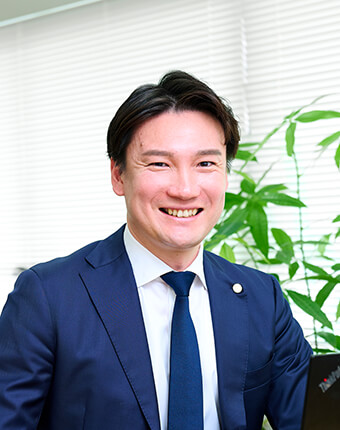
| August 2018 | Established “Yuda Administrative Scrivener Office,” specializing in visa applications and naturalization applications |
|---|---|
| April 2022 | Incorporated the private office as “Touch Immigration Law Firm” |
| Areas of Expertise | Foreign nationals’ statuses of residence and naturalization applications Specializes in foreign national visa-related matters and handles more than 1,000 consultations annually |
| Seminar Experience | Numerous seminars, including the International Administrative Scrivener Training Course, Toda City International Exchange Foundation, Saitama Japanese Language Network, Administrative Scrivener TOP 10% Club, and work visa training seminars for administrative scriveners |
| Operated Websites | Touch Immigration Law Firm International Marriage & Spouse Visa Support Center Naturalization Application Support Center Work Visa Support Center Permanent Resident Visa Support Center Business Manager Visa Support Center U.S. Visa Support Center Visa Support Center |
For a smooth application, start with a free consultation