


- Which pattern describes you as you consider obtaining a Business Manager visa?
- What you can learn from this article
- The overall flow for obtaining a Business Manager visa
- Establishing a company
- Applying for the Business Manager visa
- Summary
Which pattern describes you as you consider obtaining a Business Manager visa?
- I run a company in China or Korea. Now I want to set up a branch in Japan too.
- I am a foreign national studying at a Japanese graduate school. Once I get my degree, I want to launch a company and do business.
- I’m interested in this thing called the “Business Manager visa.”
- I looked up information about the “Business Manager visa” on the internet, but I’m at a loss as to how I should prepare from here
Among those of you reading this article right now, there may well be people like this. Put simply, it means “I want to do business in Japan.” If so, this article is perfect for you.
So what on earth should you do to make your wish a reality???
We’ll go into detail below, but this article is an explanation focused on the question, “What should I do to obtain a Business Manager visa? What’s the method?” The process leading up to obtaining a Business Manager visa is by no means simple. So we can’t write out every single detail about it in this article, but by reading this article, you can grasp the key points of what to do in order to obtain a Business Manager visa.
What you can learn from this article
By reading this article, you will understand the following.
- The overall flow for obtaining a Business Manager visa
- How to establish a company
- Applying for the Business Manager visa
Now, below we’ll explain these points clearly, using a concrete model case as we go.
The overall flow for obtaining a Business Manager visa
(1) Three processes
The overall flow for obtaining a Business Manager visa
To do business in Japan as a foreign national, the flow is roughly as follows.
- Establishing the company (+ contracting for an office)
- Procedures after establishing the company (tax office, business permits, etc.)
- Applying for the visa (Business Manager visa)
The order of steps up to obtaining a Business Manager visa
Incidentally, has anyone among you been thinking something like this?
“I want to launch a company in Japan, but I don’t know whether I can get the visa. If I manage to get the visa, I’ll establish the company after that. Until I get the visa, I’ll hold off on creating the company and wait and see. Because if I can’t get the visa, the company I went to the trouble of creating would go to waste. I want to avoid wasted effort as much as possible.”
What we’re talking about here is the order of the processes. Regarding the above, it should be (1) → (3), not (3) → (1).
However, proceeding in the order (3) → (1) is in fact also possible.
Before coming to Japan, you first prepare the conditions required for the visa application, such as funds and staff, organize into a business plan the operations you want your company to carry out going forward, first apply to Immigration for the visa, and then, once the application is approved, come to Japan, establish the company, and run it — this is permitted as well.
That said, on either route, if the conditions for it are not in place before you apply for the visa, obtaining approval is considered effectively difficult.
(2) You need to proceed according to a plan
As we’ve seen, it’s now clear that to obtain a Business Manager visa, you first need to meet the conditions. After that, the processes of establishing the company, renting an office, obtaining the necessary business permits and licenses, and handling tax office procedures still await.
What’s more, even if you clear all these processes, if you ultimately fail to obtain the Business Manager visa, all the effort you’ve made up to that point could come to nothing.
Given the above, to obtain a Business Manager visa, you are required to handle the processes methodically, starting from the ones before the visa is even obtained.
(3) A summary so far
From the above, we now understand that to obtain a Business Manager visa, you need to follow the proper steps.
So below, we explain the method for obtaining a Business Manager visa, focusing on establishing a company and applying for the Business Manager visa.
Establishing a company
(1) The type of company to establish
When establishing a company in Japan as a foreign national, you start by considering what form of company to establish.
In fact, Japan has over 100 types of corporation, but most people choose either a stock company (kabushiki kaisha) or an LLC (godo kaisha). So below, we’ll explain using the following model case.
(2) A model case
Mr. A, who is from China, is studying information engineering at a Japanese graduate school. Mr. A intends to become independent after completing his program and run an IT company. To that end, he plans to establish a stock company (hereinafter sometimes simply “the company”) and obtain a “Business Manager” visa.
(3) An overview of establishing a stock company
Put very simply, to establish a company you go through the following steps.
- Drafting the articles of incorporation
- Payment of the capital contribution
- Registration of the company’s establishment
(4) Explanation of terms
The importance of understanding the basics
Looking at (3) above, some of you may have noticed that some rather specialized terminology is used. Some of you may feel you’ve seen these terms somewhere, but come to think of it, you don’t clearly understand what they mean.
In obtaining a Business Manager visa, you may continue to run into complex systems and difficult-sounding terms, but as long as you understand them one by one, you’ll be fine. It’s often the case that the words merely look difficult while their meaning is actually simple.
Conversely, if you leave small things unaddressed and settle for feeling like you understand, there’s a risk of ending up in a situation where you later realize your understanding was unexpectedly wrong and end up making a mistake.
Enough by way of preamble — from here, we’ll explain items (1) to (3) above very briefly. After that, we’ll describe the system in more detail.
What are the articles of incorporation?
The articles of incorporation are the basic matters concerning the company you intend to establish.
For example, the company’s name and so on. As described later, in short, they are matters like “What form does it take, what is it called, and where is this company?”
What is the capital contribution?
To run a company, you need money, right? The money you pay in beforehand — that is the capital contribution.
Registration of the company’s establishment
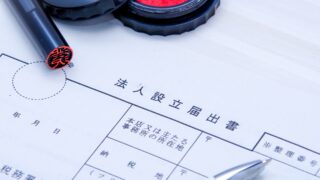
Registration of the company’s establishment is, put simply, the procedure that makes the company you intend to establish into an official entity.
As for the specific method, you do it by submitting the necessary data to a government office called the Legal Affairs Bureau. By doing so, the company comes into existence in legal terms.
You’ve probably started to get a rough picture of establishing a company. Well then, from here we’ll explain processes (1) to (3) above in a little more detail, weaving in points to watch out for.
(5) Drafting the articles of incorporation
An example of how articles of incorporation are written
We’ve established that the articles of incorporation set out the company’s basic matters, but what kind of document should you actually prepare? It’s easier to understand by looking at one, so we show a sample of articles of incorporation below.
Articles of Incorporation of Kabushiki Kaisha Touch
Chapter 1: General Provisions
(Trade name)
Article 1: This company shall be called Kabushiki Kaisha Touch.
(Purpose)
Article 2: The purpose of this company shall be to conduct the following businesses.
1. Planning, production, development, sale, and maintenance of computer software and computer systems
2. Provision of telecommunications services, information provision services, and other information services
3. Planning, design, development, and operation of information systems using the internet
4. Any and all businesses incidental or related to each of the preceding items
(Location of the head office)
Article 3: This company shall place its head office in Bunkyo-ku, Tokyo.
(Method of public notice)
Article 4: Public notices of this company shall be given by publication in the Official Gazette.
(continues below)
Typical articles of incorporation are much longer; the sample above shows only a portion. Examples of the matters recorded are the company’s trade name, business purpose, head office location, amount of capital, the names of the incorporators, and so on.
Obtaining notarization by a notary
Now, we’ve learned that on the long road to obtaining a Business Manager visa, drafting the articles of incorporation is necessary — but is that the end of the matter as far as the articles go? It is not. When establishing a stock company, you need to have the articles of incorporation you’ve drafted notarized by a notary.
As for the specific method, if you prepare the articles in paper form, you can have them notarized by taking them to a notary office within the prefecture where the head office is located. You’ll want to check in advance about the documents and fees required at that time.
This information is sometimes posted on the website of the notary office you plan to visit.
(6) Payment of the capital
How to pay in the capital
Once the notarization of the articles of incorporation is done, you move on to the next process. That is the payment of the capital.
In the model case above, if Mr. A already has a Japanese bank account (a personal one), he can use the method of transferring the money into that account.
Points to note
There’s a point that many people misunderstand.
Suppose Mr. A pays in 30 million yen as capital. Is that money entrusted to the Japanese government?
Surprisingly, the answer is NO. Which means Mr. A may use the money he paid in as the company’s working capital after the company is established.
(7) Registration of the company’s establishment
The last thing you finally do is register the company’s establishment. The method is to submit the necessary documents to the Legal Affairs Bureau. After that, the registration is complete in about a week.
Applying for the Business Manager visa
(1) To obtain a Business Manager visa
Put plainly, you prepare documents saying “This is the business I will be doing. Please grant me a Business Manager visa,” and submit them to the Immigration Bureau.
However, it isn’t enough merely to submit the documents — if you don’t clear certain points (the examination criteria), it will be denied. Which means that, more precisely, to obtain a Business Manager visa you must also clear the examination criteria.
(2) The examination criteria for the Business Manager visa
The next question, then, is what these examination criteria are — something you can’t get around when it comes to the method of obtaining a Business Manager visa.
Below, we first show the formal examination criteria, and second, explain them more concretely.
The provisions of the landing permission criteria
Only a portion is excerpted below.
The applicant (for example, Mr. A in the model case above) must satisfy all of the following.
1. A business office for operating the business to which the application relates exists in Japan. However, where the business in question has not yet commenced, a facility to be used as the business office for operating that business has been secured in Japan.
2. The scale of the business to which the application relates falls under all of the following.
(a) …it is operated with full-time staff… engaged in it.
(b) …the amount of capital… is 30 million yen or more.
3. Any one of the persons… engaged in it… is a person who has ability at or above the level of being able to understand and use Japanese with a high degree of independence…
4. The applicant falls under either of the following.
(a) Holding a doctoral degree, a master’s degree, or a professional degree… in a field relating to business management or to the business to which the application relates…
(b) Having three or more years of experience… in the management or administration of a business.
The wording is rather difficult, but what does it actually mean?
Below, please allow us to explain more concretely, while drawing on Mr. A’s case from the model case.
Examination criterion 1
To put it roughly, it means you have a proper office for doing business, or that it looks like you’ll be able to prepare one going forward.
So what about a case like this? Recently there are services like monthly rental offices, aren’t there? Specifically, the pattern where you rent for just a few months and it’s not clear what happens after that. It may be convenient, but it feels a bit unsettled.
Can Mr. A clear the examination criterion above by contracting for that kind of simple type of office?
The answer is, unfortunately, in principle NO.
That’s because, when it comes to activities relating to the Business Manager visa, the business is required to be operated on a continuous basis.
Examination criterion 2
There were two criteria, (a) and (b). So below, we explain each of them.
First, according to criterion 2(a) above, at least one full-time member of staff residing in Japan is required to work there.
One example might be a classmate from Mr. A’s university — a Japanese classmate living in Japan. There may well be a friend who sympathizes with Mr. A’s business model and will help with the work.
However, being “full-time” is required. In short, a part-time job and the like will not be accepted.
Next, according to criterion 2(b) above, the amount of capital or the total amount of contributions is also required to be 30 million yen or more.
Something may be bothering you here. Does Mr. A, in the model case above, have to contribute the 30 million yen himself?
In fact, the applicant’s own investment amount (that is, Mr. A’s) is not a requirement for approval.
However, there’s one point to note here. It is that Mr. A’s own investment amount becomes an important factor in the judgment during the Business Manager visa examination.
Furthermore, as for Mr. A, he is a student. There are limits even if he works a part-time job, so he belongs to a category of people who would not normally be thought to have a large sum of money. That being so, the question “How did you raise such a large investment amount?” will naturally be asked. So Mr. A will need to prepare so that he can properly give an explanation on that point.
Examination criterion 3
Put simply, as long as you’re running a company in Japan, someone needs to be able to speak Japanese. As with criterion 2(a), this person is required to be “full-time.” If the applicant himself can speak Japanese, that satisfies the condition without any problem.
For a foreign national to meet this condition, an examination and the like are of course fine as proof of Japanese language ability, but for example, having studied at a Japanese university, having lived in Japan since birth and graduated from elementary, junior high, and high school, or simply having lived in Japan for 20 years or more, also satisfies the condition.
As for Mr. A, he belongs to a graduate school, so once he completes his program, he is likely to meet this requirement without any problem. There is no issue even if he hasn’t passed any particular examination.
Examination criterion 4
This one means that when a foreign national runs a company in Japan, a certain level of knowledge or experience is required after all.
Indeed, it would be odd for a foreign national with no experience or knowledge at all to suddenly run a company in a foreign country like Japan. On top of that, a large sum of 30 million yen in capital is required for the visa application, and in the worst case an amateur who knows nothing could see the 30 million they’d painstakingly saved vanish into thin air, and have to return home with nothing. To prevent such a situation, requirements concerning knowledge and experience like these are set out.
In Mr. A’s case, he majored in information engineering at graduate school and is now going to establish a related IT company, so he has sufficient knowledge and meets this condition.
Summary
Extracting the essence of what this article has covered regarding the method for obtaining a Business Manager visa gives the following.
- Proceed according to a plan
- Establish a company: draft the articles of incorporation, pay in the capital contribution, register the company’s establishment
- Post-establishment procedures
- Apply in line with the examination criteria.
Thank you for reading the article to the end. In fact, what’s written in this article is only a small part. There are various other points to note and systems besides these. There may even be points to note that are unique to you, the person reading this article.
At our firm (Gyoseishoshi Corporation TOUCH), administrative scriveners specializing in visa applications, with abundant experience and a strong track record, will support you. There are limits to what you can do on your own, and the Business Manager visa in particular has the aspect that you absolutely do not want to fail.
If you carry on with unresolved anxieties and questions about your visa, it’s not only a waste of time but can also become an obstacle to developing your business going forward. So please feel free to contact us at our firm (Gyoseishoshi Corporation TOUCH).