

Insights
What are the conditions for Chinese people to obtain a business manager visa for the real estate business? Check the requirements and points to note
- 2024年09月13日


When foreign nationals start a business in Japan, what they must obtain without fail is the “Business Manager” status of residence (the Business Manager Visa). In recent years, the ministerial ordinance that sets the permission criteria for this Business Manager Visa has been substantially revised, and the requirements have been made stricter than ever before.
In particular, for foreign managers who aim to obtain or renew the visa as a “Sole Proprietor” without establishing a corporation, accurately understanding the new requirements and making appropriate preparations is indispensable.
In this article, an Administrative Scrivener well-versed in immigration affairs thoroughly explains the current law on the Business Manager Visa as conformed to the latest ministerial ordinance revision—from the points of change, to hurdles unique to Sole Proprietors, and to commonly asked questions about real estate investment.
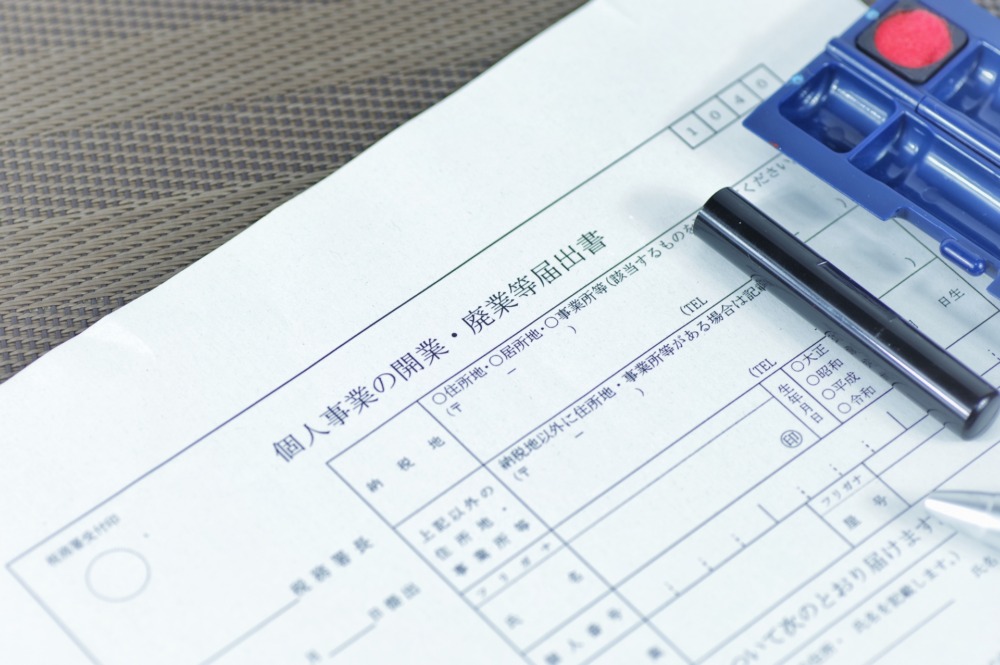
To obtain the Business Manager Visa, you do not necessarily have to establish a corporation such as a “Joint-Stock Company (Kabushiki Kaisha)” or a “Limited Liability Company (Godo Kaisha).” Under the current criteria, even when a foreign national operates a business as a “Sole Proprietor,” it is possible to obtain the Business Manager Visa.
Under the previous system, satisfying requirements such as “total amount of investment of 5 million yen or more” was enough to step into the application arena. However, with the latest ministerial ordinance revision, this criterion has been substantially raised.
Under the current criteria, not only the expansion of business scale but also expertise as a manager, Japanese language ability, and “the certainty of the business” are strictly examined. When applying as a Sole Proprietor as well, you must clear all of these stricter requirements.
The greatest merit of applying for the Business Manager Visa as a Sole Proprietor lies in the points that you can save on initial costs of establishing a corporation (registration costs, articles of incorporation authentication fees, etc.) and skip the trouble of incorporation procedures, allowing you to start the business speedily.
On the other hand, the demerit that can be cited is the point that “objectively proving the business scale (invested capital) is extremely difficult.” When the business entity is a corporation, the clear figure of “capital” can be confirmed through documents such as the certified copy of the commercial register, but a Sole Proprietor has no concept of capital. Therefore, how to prove to Immigration the “invested assets of 30 million yen or more” described later becomes the greatest wall for a Sole Proprietor.
Now let’s look at the “five important requirements” changed by the latest ministerial ordinance one by one in detail.
Substantially raised from the previous 5 million yen, it has become mandatory that the total amount of assets provided for the use of the business in question be 30 million yen or more. When the business entity is an individual, this amount refers to “the total amount invested as things necessary to operate the business, such as securing a place of business, the salaries of the employees employed (for one year), and capital investment expenses.”
At the company, etc. operated by the applicant, it is necessary to employ one or more full-time employees. What should be noted here is the “status of residence” of the employees you employ. Those eligible as full-time employees are limited to Japanese nationals, Special Permanent Residents, or persons with status-based statuses of residence such as “Permanent Resident,” “Spouse or Child of Japanese National,” “Spouse or Child of Permanent Resident,” or “Long-Term Resident.” Employing a foreign national holding a general work visa (a status of residence in Appended Table I of the Act) cannot satisfy this requirement.
A new “Japanese language ability” requirement has been added. Either the applicant themselves or a full-time employee they employ must have a considerable level of Japanese language ability (equivalent to CEFR B2 or above). Specifically, it is proven through certification of Japanese-Language Proficiency Test (JLPT) N2 or above, a score of 400 or more in the BJT Business Japanese Proficiency Test, or by having graduated from a Japanese university, completed compulsory education, or graduated from high school.
Strict conditions are also imposed on the applicant’s own career. The applicant must have three or more years of work experience in the operation or management of a business (including the period of preparatory activities for starting a business). Alternatively, they are required to have obtained a doctoral, master’s, or professional degree related to business management or the field of the business.
For the new Business Plan submitted at the time of the status of residence decision, in order to secure its concreteness, rationality, and feasibility, confirmation by a person with specialized knowledge of business management has been made mandatory. Eligible specialists include Small and Medium Enterprise Management Consultants, Certified Public Accountants, and Tax Accountants. You can no longer submit a plan you drafted alone as is.
The most difficult thing in a Sole Proprietor’s obtaining the Business Manager Visa is proving that “assets of 30 million yen or more have been invested in the business.”
In the latest Immigration review practice, a Sole Proprietor’s invested assets are confirmed by whether the assets invested in that business amount to 30 million yen or more, based on the amount in the “assets section” of the “balance sheet.” The starting line is to accurately prepare a balance sheet for the business and clearly distinguish business assets.
Many people misunderstand, but merely having a “certificate of balance of 30 million yen” in a personal bank account is not recognized as assets invested in the business. In Immigration’s review, mere savings are not treated as assets invested in the business. It is necessary to objectively prove that those funds are not living expenses or personal savings, but rather funds “that will certainly be used (have been used) for this business.”
To confirm that investment has actually been made in the business, supporting materials concerning each asset are indispensable.
Extremely strict documentary review is carried out, including the transparency of the source of the funds (how you formed the 30 million yen).
At our office, we receive a great many inquiries such as, “Can I obtain the Business Manager Visa by purchasing real estate of 30 million yen or more and renting it out (as a landlord business)?”
To state the conclusion first, merely purchasing property and outsourcing the work to a management company makes obtaining the visa extremely difficult.
Even if you can clear the investment amount requirement (30 million yen or more), what is most emphasized in the Business Manager Visa is whether “the applicant is substantially carrying out business operation/management activities.” The current guidelines clearly stipulate that, “If, due to outsourcing or the like, the actual activity as a manager is not sufficiently recognized, it will be treated as not being recognized as carrying out activities falling under the ‘Business Manager’ status of residence.”
If you purchase real estate but outsource (dump) all of the recruitment of tenants, collection of rent, complaint handling, cleaning arrangements at the time of move-out, etc. to an external real estate management company, the applicant’s own daily duties (management activities) become nil. In this case, they would be regarded as an “investor” rather than a “manager,” and would be denied.
To obtain and maintain the Business Manager Visa as a Sole Proprietor in a real estate-related business, you need to carry out “substantial management activities” yourself.
For example, the following types of business substance are required.
You need to strongly recognize that this is not something of the nature of “you can buy a visa if you put up the money.”
In the review of the Business Manager Visa, in addition to business scale and management substance, whether you are properly observing Japanese laws and rules is also strictly checked.
In the case of a Sole Proprietor, many people want to use their home as an office to cut costs; however, under the current criteria, because it is necessary to secure a place of business for carrying out management activities according to scale, etc., combining your home with a place of business is, as a rule, not recognized. You need to secure an independent office or store for business use, and submit the lease agreement, the signboard, photos of the interior, and so on.
The submission of materials proving the status of obtaining permits and licenses required for the business operated by the applicant is requested.
Also, at the time of extension of the period of residence, the status of fulfillment of the obligation to pay public charges is confirmed. Specifically, in addition to the enrollment status of labor and social insurance such as employment insurance, workers’ accident compensation insurance, and health insurance, in the case of a Sole Proprietor, the proper declaration and payment of national taxes (withholding income tax, filed income tax, consumption tax, etc.) and local taxes (individual resident tax, individual enterprise tax) are strictly confirmed. If there are unpaid amounts or delays in procedures, the risk of the renewal being denied increases.
As explained up to here, with the latest ministerial ordinance revision, the requirements for the Business Manager Visa have been made extremely stricter.
In the case of a Sole Proprietor in particular, hurdles to be cleared have piled up—such as “preparation of complex materials to prove the prospective investment of 30 million yen,” “confirmation of the Business Plan by a specialist,” and “proof of substantial management activities not relying on outsourcing.” Immigration’s review criteria are, as a rule, documentary review, and it is not something where “you can have them understand later by explaining verbally.” There is no end to cases in which trivial contradictions or insufficient explanations in submitted documents lead to a fatal denial.
At our office, Administrative Scriveners well-versed in the latest Immigration Control Act and review procedures strongly support all foreign managers.
For those with concerns about obtaining or renewing the Business Manager Visa under the current criteria, please make use of our office’s free consultation. We will propose the optimal roadmap for reliably succeeding with your business in Japan.
Insights
Insights

Insights

Insights
![Complete Guide to the Business Manager Visa — Meeting All 6 Requirements: JPY 30M Capital, Japanese, Employment & Office [Oct 2025 Reform]](https://touch.or.jp/keiei/wp-content/uploads/2026/07/5.jpg "Complete Guide to the Business Manager Visa — Meeting All 6 Requirements: JPY 30M Capital, Japanese, Employment & Office [Oct 2025 Reform]")

| August 2018 | Established “Yuda Administrative Scrivener Office,” specializing in visa applications and naturalization applications |
|---|---|
| April 2022 | Incorporated the private office as “Touch Immigration Law Firm” |
| Areas of Expertise | Foreign nationals’ statuses of residence and naturalization applications Specializes in foreign national visa-related matters and handles more than 1,000 consultations annually |
| Seminar Experience | Numerous seminars, including the International Administrative Scrivener Training Course, Toda City International Exchange Foundation, Saitama Japanese Language Network, Administrative Scrivener TOP 10% Club, and work visa training seminars for administrative scriveners |
| Operated Websites | Touch Immigration Law Firm International Marriage & Spouse Visa Support Center Naturalization Application Support Center Work Visa Support Center Permanent Resident Visa Support Center Business Manager Visa Support Center U.S. Visa Support Center Visa Support Center |
日本進出に関して知りたいなら
まずは無料相談をご活用ください。
全国対応。企業様、監理団体様、登録支援機関様、それぞれの課題を解決する
サポートをご用意しております。

Concerns About Expanding
into Japan?
Please Start with
a Free Consultation
Nationwide / Multilingual Support