Language
 永住申請お役立ちコラム
![[Immigration Law Amendment] Grounds for Revocation of Permanent Residence Status Expanded! 3 Cases Where Foreign Nationals Lose Permanent Residence Status Explained](https://touch.or.jp/eizyu/wp-content/uploads/2024/09/eyecatch_eizhu_disqualify-1.jpg "[Immigration Law Amendment] Grounds for Revocation of Permanent Residence Status Expanded! 3 Cases Where Foreign Nationals Lose Permanent Residence Status Explained")
[Immigration Law Amendment] Grounds for Revocation of Permanent Residence Status Expanded! 3 Cases Where Foreign Nationals Lose Permanent Residence Status Explained
- 2026年05月14日
Full Support for Japanese Permanent Residency Applications!

Operated by: Touch Immigration Law Firm


目次
Some individuals who have stayed in Japan for an extended period under the status of residence “Diplomat” or “Official” consider obtaining permanent residence in Japan.
This page explains the process of obtaining permanent residence from statuses of residence such as “Diplomat” or “Official.”
The “Diplomat” status of residence refers to the status of residence in Japan granted for “activities as members of diplomatic missions or consular offices of foreign governments accepted by the Government of Japan, persons enjoying privileges and immunities equivalent to those of diplomatic envoys under treaties or international practice, or members of their household.”
Specifically, this applies to ambassadors and consuls general of foreign governments, as well as their family members. The period of stay corresponds to the duration of diplomatic activities, with no specific period defined.
The “Official” status of residence refers to the status of residence in Japan granted for “activities as persons engaged in official duties of foreign governments or international organizations recognized by the Government of Japan, or members of their household” (excluding those falling under “Diplomat” above).
Specifically, this applies to staff members of foreign embassies and consulates, persons dispatched on official duties from international organizations, and their family members.
The period of stay is 15 days, 30 days, 3 months, 1 year, 3 years, or 5 years.
As mentioned above, “Diplomat” and “Official” are somewhat special statuses of residence compared to other general statuses of residence.
However, “Diplomat” and “Official” are not excluded from Article 22 of the Immigration Control Act or the Guidelines for Permission for Permanent Residence.
Therefore, applications for permanent residence from “Diplomat” or “Official” status are also possible.
However, due to the nature of these duties, “Diplomat” and “Official” status holders are typically expected to return to their home country after completing their assignments.
For this reason, when applying for permanent residence, immigration authorities will, in practice, confirm whether the applicant plans to return to their home country after completing their assignment, and whether the applicant personally wishes to remain in Japan in the future (inquiries to the applicant’s home government may also be made as necessary).
If the applicant meets the requirements set forth in the Guidelines for Permission for Permanent Residence (described below) and there are no special circumstances that would actively warrant denial from the perspective of the Guidelines, the application will be considered for approval.
To have a permanent residence application approved, the following requirements must be met.
For details on each requirement, please see this page (About the Conditions for Permanent Residence).
Note that those who have contributed to friendship and cultural exchange with Japan, or those who have held certain positions in international organizations, may be evaluated as “persons recognized as having made contributions to Japan.”
If recognized as a “person who has made contributions to Japan,” the requirement under (4) A above of “continuously residing in Japan for 10 years or more” is relaxed, and the requirement is met if the applicant has resided in Japan for 5 years or more (need not be “continuous”).
For details, please see this page (What is a Person Recognized as Having Made Contributions to Japan).
Staff members of the Taipei Economic and Cultural Representative Office in Japan, staff members of the Permanent General Mission of Palestine in Japan, and their family members, who are engaged under the “Designated Activities” status of residence, may appear to be treated similarly to “Diplomat” or “Official” status holders at first glance.
However, since it is understood that these individuals will return to their home country after completing their assignments, their applications for permanent residence will be denied unless there are special circumstances.
This page has explained permanent residence applications from statuses of residence such as “Diplomat” or “Official.”
Since “Diplomat” and “Official” statuses of residence are treated favorably in permanent residence applications, considering obtaining permanent residence is one option to explore.
永住申請お役立ちコラム
永住申請お役立ちコラム

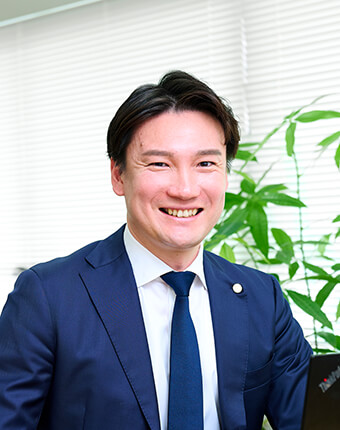
| August 2018 | Established “Yuda Administrative Scrivener Office,” specializing in visa applications and naturalization applications |
|---|---|
| April 2022 | Incorporated the private office as “Touch Immigration Law Firm” |
| Areas of Expertise | Foreign nationals’ statuses of residence and naturalization applications Specializes in foreign national visa-related matters and handles more than 1,000 consultations annually |
| Seminar Experience | Numerous seminars, including the International Administrative Scrivener Training Course, Toda City International Exchange Foundation, Saitama Japanese Language Network, Administrative Scrivener TOP 10% Club, and work visa training seminars for administrative scriveners |
| Operated Websites | Touch Immigration Law Firm International Marriage & Spouse Visa Support Center Naturalization Application Support Center Work Visa Support Center Permanent Resident Visa Support Center Business Manager Visa Support Center U.S. Visa Support Center Visa Support Center |
For a smooth application, start with a free consultation