
Insights

The Flow to Forming a Company in Japan — Hurdles Unique to Foreign Companies (Seals, Signature Certificates, Articles Notarization, BOJ Notification)
- 2026年07月01日


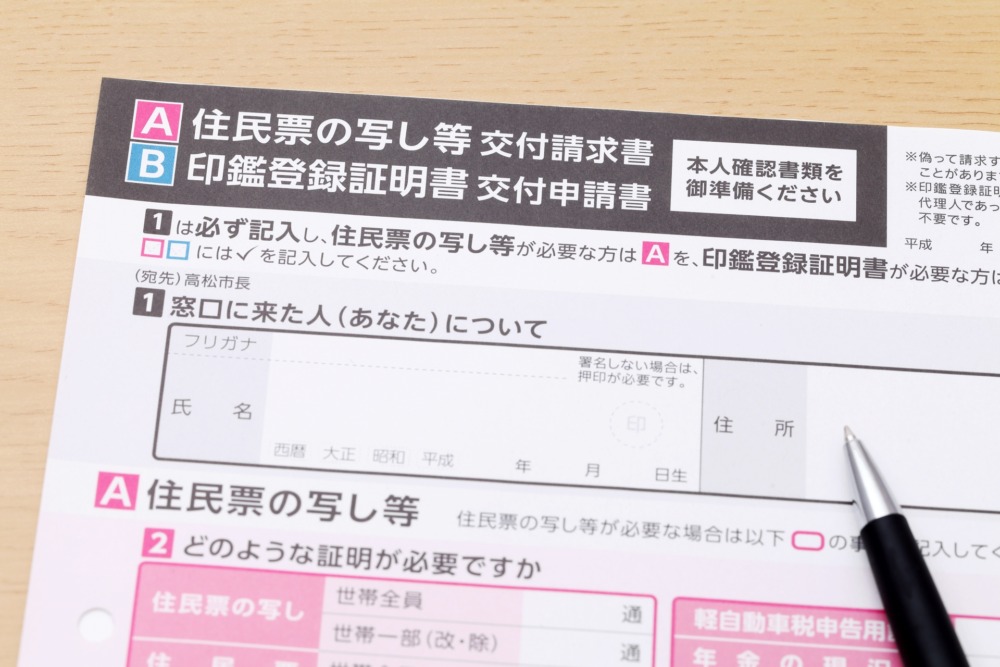
If you are considering establishing a company and obtaining a business manager visa, you will need a seal certificate or signature certificate when establishing the company. Specifically, the certificate you need to obtain will vary depending on your individual circumstances, as shown below.
| For foreigners residing in Japan | “Seal Registration Certificate” issued by a Japanese city or town office |
|---|---|
| If you live overseas | 1. If you live in a country that has a seal culture, you will need a “Seal Certificate” issued by that country. 2. If you live in a country that does not have a seal culture, you will need a “Sign Certificate.” |
This article contains useful information for people like the ones mentioned above.
First, let’s review the prerequisite knowledge. At first glance, it may seem that there is nothing to do with business management visas or company establishment, but it is actually related to the latter half of this article.
Do you know what a “seimei” is? They are made of wood, bamboo, stone, horn, ivory, metal, synthetic resin, etc., and have letters or symbols carved on one side. Seals are used as a seal for individuals, government officials, and organizations to prove their responsibility and authority. A specific way to use them is by pressing them on public and private documents (paper).
When a seal is stamped on a document, it is presumed that the seal owner stamped it with their own will, and therefore that the document is genuine and not a forgery. This is based on the idea that a seal, which is proof of one’s responsibility and authority, is unlikely to be easily given to someone else to use, and therefore the seal was likely stamped of the owner’s own will, not by someone else.
When you think of a seal, you may have the image that it is only used in certain Asian countries. In fact, while there is a culture of using seals in Japan, Taiwan, and China, in most countries around the world, including English-speaking countries, the culture of owning a seal is not common. Therefore, it is not at all strange that there are people who do not have a seal. As an aside, in Medieval Europe, important documents and letters were stamped with a seal to confirm their authenticity and authenticity, hence the word “seal” (derived from the Latin “sigillum”).
Below, we will assume a situation where a foreigner establishes a company prior to applying for a business manager visa. In that case, a seal registration certificate is basically required.
A seal registration certificate is a document that certifies that a seal of a specific individual or corporation has been officially registered. This means that the seal can generally be used on official documents and contracts, and has the same effect as an individual’s signature.
Now, let’s go back to the topic of company establishment for the application of a business manager visa. Who needs a seal certificate here? The promoters and directors. If one person holds both roles, two Seal Registration Certificates are required in total: one for the promoter and one for the director.
When a foreigner establishes a company in Japan, whether or not they need to register their seal and get a certificate issuance depends on the case. We will explain each specific case below.
First, there is the case where the foreigner is residing in Japan. In this case, a Seal Registration Certificate is required. We will explain later what type of person can register a Seal.
Next, there are cases where the foreigner lives outside of Japan. In this case, it can be further divided into two patterns. The first is a country that has a culture of using seals (Taiwan, China), and the second is a country that does not. Therefore, we will discuss these two patterns separately below.
For the following countries that have a seal culture, the following documents must be submitted when establishing a company.
For these countries, the submission of a seal registration certificate is not required, but instead the following documents are accepted. The “signature certificate” described below will be explained again in 7 below.
Signature certificate + Japanese translation
As mentioned in 5 (1), if a foreigner lives in Japan, a seal registration certificate is required when establishing a company. In order to receive the seal certificate, the seal must be registered. This raises the question of what points must be met in order to be able to register the seal. In this regard, seal registration is possible in the following cases:
So, assuming you have cleared point (1) above, the next thing you need to prepare is a seal. Speaking of seals, some of you may have seen mass-produced stamp-type seals (called Shachihata seals) at 100 yen shops. Are such seals OK? The answer is no. So what should you do? The best thing to do is to have a new one made to order, because that will make it harder to counterfeit.
Furthermore, even if you order a custom-made seal, you may wonder what kind of seal you should order. In this regard, each city, town, and village has its own rules regarding size and material, so it is best to check.
Once you have obtained your seal, you can finally register it. The necessary information is listed below.
| Location | The city where your address is registered |
|---|---|
| What to bring | The seal you plan to register, your passport, and documents required for identity verification. |
| The cost is | around 100 to 400 yen. |
On the day you complete the procedure in 6 (3) above, you will be issued a Seal Registration Certificate, which will officially certify that the registered seal is truly yours.
Now, about the signing certificate. A signature certificate is a system for people in countries that do not have a culture of using seals. In short, it can be thought of as an alternative system to the seal registration mentioned in 6 above. Specifically, this certifies that the signature is genuine.
According to the Ministry of Justice, documents created by the following institutions are permitted to be attached as signature proof.
The essence of this article is listed below.
Insights
Insights
Insights
Insights

| August 2018 | Established “Yuda Administrative Scrivener Office,” specializing in visa applications and naturalization applications |
|---|---|
| April 2022 | Incorporated the private office as “Touch Immigration Law Firm” |
| Areas of Expertise | Foreign nationals’ statuses of residence and naturalization applications Specializes in foreign national visa-related matters and handles more than 1,000 consultations annually |
| Seminar Experience | Numerous seminars, including the International Administrative Scrivener Training Course, Toda City International Exchange Foundation, Saitama Japanese Language Network, Administrative Scrivener TOP 10% Club, and work visa training seminars for administrative scriveners |
| Operated Websites | Touch Immigration Law Firm International Marriage & Spouse Visa Support Center Naturalization Application Support Center Work Visa Support Center Permanent Resident Visa Support Center Business Manager Visa Support Center U.S. Visa Support Center Visa Support Center |
日本進出に関して知りたいなら
まずは無料相談をご活用ください。
全国対応。企業様、監理団体様、登録支援機関様、それぞれの課題を解決する
サポートをご用意しております。

Concerns About Expanding
into Japan?
Please Start with
a Free Consultation
Nationwide / Multilingual Support