
Insights
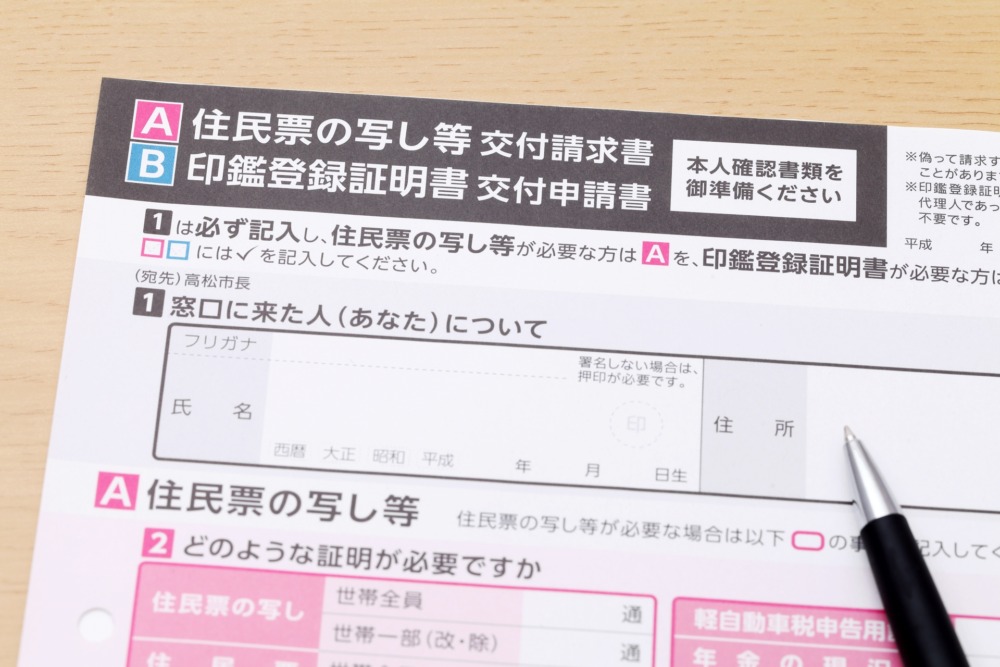
How to obtain a seal certificate and signature certificate for company establishment for a business management visa
- 2023年08月22日



Once you have decided on the form of entry and the type of company, it is finally time to form the company. The company formation itself follows a fixed procedure in Japan, and by advancing step by step you can steadily get all the way to formation. For incorporators and officers who are overseas, however, several “hurdles unique to Japan” appear at points a Japanese person would pass through without a second thought — the seal (hanko); the signature certificate that stands in for a seal certificate; drafting the articles of incorporation in Japanese and having them notarized by a notary; paying in the capital while there is still no bank account in the company’s name; and notification/reporting of inward direct investment under the Foreign Exchange and Foreign Trade Act (the Forex Act). In this article, centered on the stock company, we lay out the overall steps of formation in order and explain the points to watch when entering Japan in concrete terms. An immigration lawyer specializing in international work will guide you in plain terms.
What you’ll learn in this article
The procedure for forming a company in Japan follows a set order. Decide the basics, draft the articles of incorporation (the document setting out the company’s basic rules), have them notarized at a notary’s office (for a stock company), pay in the capital, and apply for incorporation registration at the Legal Affairs Bureau — proceed step by step along this flow, and the company comes into being. When a Japanese person forms a company in Japan, there is no major obstacle here.
What is difficult for foreign companies and foreigners is not the procedure itself, but the “Japan-specific premises” that appear along the way. You cannot obtain a seal certificate; a bank account in the company’s name can only be opened after formation; and a foreign investor’s contribution may involve procedures under the Forex Act. This article aims to untangle these hurdles one by one. The actual amounts of formation cost (under our firm’s plans, 515,000 yen for a stock company and 463,000 yen for a limited liability company, tax included) and their breakdown are covered in detail in a separate article (→ the “Cost of Entry” article).
Before getting into the details, let’s grasp the flow of formation on a single sheet. The following table lines up the 7 steps of formation, centered on the stock company, noting the differences with a limited liability company alongside. The content of each step is explained in turn in the sections that follow.
| Step | Main content | Difference: stock company (KK) / limited liability company (GK) |
|---|---|---|
| ① Deciding the basics | Decide the trade name, head-office location, business purpose, capital, governance structure, officers, and fiscal year | Common (the office relates to visa requirements; a virtual office is in principle not allowed) |
| ② Drafting the articles | Put the company’s basic rules in writing. With electronic articles, the 40,000-yen stamp duty is not required | Common (some items in the articles differ by form) |
| ③ Notarizing the articles | Have the articles notarized at a notary’s office | Required for a KK (about 50,000 yen in fees at capital of 30 million yen, plus the cost of certified copies) / not required for a GK |
| ④ Preparing overseas parties’ documents | Signature certificates, apostille / consular authentication, the parent company’s documents and translations | Common (work on the overseas head-office side; tends to take time) |
| ⑤ Paying in the capital | Pay into an incorporator’s personal account and evidence the payment | Common (an account in the company’s name comes after formation) |
| ⑥ Registration application | Apply for incorporation registration at the Legal Affairs Bureau (handled by our partner judicial scrivener) | Common / registration and license tax is capital × 0.7% = 210,000 yen at 30 million yen (for both KK and GK) |
| ⑦ Post-formation procedures | The company’s registered seal and seal notification, tax and social-insurance notifications, corporate account, Forex Act reporting | Common |
※ The table above is a general organization. Registration is handled by a judicial scrivener, tax by a tax accountant, and labor by a labor and social security attorney, with Touch Immigration Lawfirm coordinating as your point of contact. Procedures and fees differ due to revisions and individual circumstances, so please check the latest official information.
First, decide the basics that form the company’s “blueprint.” Specifically: the trade name (company name), head-office location, business purpose, capital, governance structure (such as the number of directors), officers, and fiscal year. For a foreign company, two points require attention here.
One is the office. When you assume the “Business Manager” residence status (the Business Manager visa), securing an independent office is a requirement, and a virtual office or a rented meeting room is in principle not allowed. The head-office location affects not only registration but also visa and bank-account screening, so it is important to choose an “address with real substance” at the outset. The other is the business purpose. If you will run a business that requires a license, and the business purpose in the articles is not appropriately worded, you can stumble on the later license application.
A Point to Watch When Entering Japan
The office and the business purpose are “not just about formation”
If you think “just register at a cheap address for now and fix the purpose later,” rework occurs in the later steps. The address directly affects the “independent office” requirement of the Business Manager visa and bank-account screening, and the business purpose is a precondition for licensing. It is safer to design the formation basics together with visas, licensing, and accounts.
The articles of incorporation are the company’s most basic rules, setting out its name, purpose, head office, capital, governance, and so on. Two cost-related points arise here.
First, using electronic articles removes the 40,000-yen stamp duty that applies to paper articles. Our firm’s formation support handles electronic articles. Second, whether notarization is required differs by form. A stock company (KK) must have its drafted articles notarized by a notary at a notary’s office. The notarization fee is tiered by the amount of capital; at capital of 30 million yen it is about 50,000 yen (there is also the cost of certified copies of the articles; under our firm’s plan it is 52,000 yen including the copies). A limited liability company (GK), by contrast, does not require notarization of the articles, and this presence or absence is the main factor behind the difference in formation cost between a stock company and a limited liability company. Note that the articles must be drafted in Japanese, and the business purpose and other items must be appropriately worded in Japanese.
This is the first hurdle that stands in the way of a foreign company’s formation. Incorporators and officers living overseas cannot obtain a Japanese seal certificate. Instead, they prepare a signature certificate in their home country. There are two ways to obtain a signature certificate — obtaining it at a Japanese diplomatic mission (embassy or consulate) in the country of residence, or having it authenticated by a notary in the home country and then attaching an apostille / consular authentication — and which applies differs by country and situation (see the [Focus Column] (b) below for details).
When the parent company (the foreign company) is the investor, you prepare documents evidencing the parent company’s registered particulars, a sworn affidavit, and the like. Because these are documents created and issued abroad, in principle an apostille (for member countries of the Hague Convention) or consular authentication (for non-member countries) must be attached, along with a Japanese translation. All of this is work advanced on the overseas head-office side, and the procedures and required number of days differ greatly by country. The details of signature certificates, apostille, and consular authentication are organized again in the [Focus Column] (b) below.
Before the incorporation registration is complete, there is still no bank account in the company’s name. Therefore, the capital is paid into the Japanese bank account of an incorporator (in many cases the representative as an individual), and the fact that the payment was made is evidenced.
What is difficult for foreign companies and foreigners is securing this “incorporator’s Japanese account.” When remitting the capital from overseas, care is needed with evidence of receipt and the handling of foreign exchange; and for a foreigner newly coming to Japan, opening a bank account in an individual’s name is itself not easy in the first place. In practice, therefore, the order tends to be: first come to Japan and complete resident registration, open an individual account, and then pay in the capital.
Note that “you cannot form a company unless the representative lives in Japan” is a common misconception. Since 2015, it is no longer necessary for one of the representative directors to have an address in Japan, and legally you can form a stock company even if all officers reside overseas. However, as just seen, in the practical scenes of paying in the capital and opening a corporate account, having someone with an address and a personal account in Japan makes the procedures far easier to advance. It is safer to design the timing of the person’s arrival in Japan and resident registration early, within the overall sequencing of formation.
This “person with an address and account in Japan” is not necessarily the principal. There are broadly two ways to pay in. The principal-first type (Route A) is where the principal comes to Japan first on a residence status for preparing to start a business (such as the 4-month “Business Manager”), and personally handles resident registration, opening an account in their own name, and paying in. The collaborator type (Route B) is where the account of a collaborator who has an address and residence status in Japan (such as a director at formation) is used as the payment destination, and the principal advances the formation while remaining outside Japan.
What is easy to confuse here is that the following two are separate axes and can be combined freely. Axis ① = who is the investor / shareholder (the principal as an individual, or the ODI [Outbound Direct Investment] of a home-country company the principal controls). Axis ② = whose account is used to pay in / whether the principal comes to Japan (an account in the principal’s name, or a collaborator’s account). For example, a combination of [shareholder = home-country company (ODI) + payment = collaborator’s account] also works. Deciding the investing entity (Axis ①) and the party who pays in (Axis ②) separately at the outset keeps the later remittance and account sequencing from wavering. How to obtain the residence status (principal-first or collaborator type) is explained in the “Business Manager Visa” and “Parallel Progress & Sequencing” articles.
A Point to Watch When Entering Japan
The “chicken-and-egg” of paying in and the account
The company’s account can only be opened after formation, and paying in before formation requires an individual’s account. Yet a foreigner newly coming to Japan does not find it easy to open an individual account either — this “chicken-and-egg” is a classic cause of delay in the formation schedule. It is important to design the order of coming to Japan, resident registration, account opening, and paying in early, within the overall sequencing of formation (the same caution applies to remitting and paying in the 30 million yen of capital on the premise of the Business Manager status).
Once the basics, the articles, and the payment are in place, you apply for incorporation registration at the Legal Affairs Bureau. The registration procedure itself is a judicial scrivener’s field of expertise, and at Touch Immigration Lawfirm our partner judicial scrivener handles it.
What arises here is the registration and license tax. The amount is calculated as capital × 0.7%, and if you set the capital at 30 million yen on the premise of the Business Manager status, it comes to 210,000 yen (30 million × 0.7%) for both a stock company and a limited liability company. You often see the explanation that “a stock company is at least 150,000 yen and a limited liability company at least 60,000 yen,” but this is only about the “minimum amount” and does not apply to the readers of this series, who assume capital of 30 million yen. At the point the registration is complete, the company comes into being in law.
Even after the company comes into being through registration, the procedures do not end here. Immediately after formation, procedures such as the following continue.
First, create the company’s registered seal and file the seal notification with the Legal Affairs Bureau. Next, there are time-limited tax notifications, such as the notification of incorporation to the tax office and to the prefecture and municipality (within 2 months after the date of incorporation registration). If you hire employees, notification of social insurance to the pension office and the like is also required. A corporate bank account for the business is opened anew after the company comes into being, but account screening for foreign-owned, newly established companies is strict and takes time. And because of its nature as a contribution by a foreign investor, reporting (or prior notification) of inward direct investment under the Forex Act may become necessary. This Forex Act issue is organized in detail in the next [Focus Column].
Among the steps up to here, we now summarize and explain the 3 hurdles that are especially important for foreign companies and foreigners. They are Japan-specific and directly tied to the formation schedule.
In Japan, there is a custom of using a registered seal as a “jitsuin” (registered seal) and a “seal certificate (inkan shomei)” that officially proves the seal impression is the person’s own. For a company as well, you file the company’s registered seal at the time of incorporation registration (seal notification). In scenes such as contracts and bank procedures, it still remains that a seal impression, rather than a signature, is required. It is an unfamiliar mechanism for those from a signature-based culture, but first grasp the point that “in Japan, there are scenes where a seal and a seal certificate are used for identity verification.”
Because incorporators and officers living overseas cannot obtain a seal certificate, they prepare a signature certificate (a document that officially proves the person did indeed sign) in its place. There are broadly two routes to obtain it.
The first is to sign in the presence of a consul at a Japanese diplomatic mission (embassy or consulate) in the country of residence and receive a signature certificate. Because this is a document issued by a Japanese public authority, it can be used in Japan as is, without attaching an apostille or consular authentication. Diplomatic missions are often by appointment, and the person needs to go in person.
The second is to sign in the presence of a notary public in the home country and receive authentication. In this case, an extra step is needed to make a document created abroad valid in Japan: if the home country is a member of the Hague Convention (the Apostille Convention), attach an apostille; if a non-member, attach consular authentication at a Japanese diplomatic mission. Documents issued abroad — such as a certificate of registered particulars or a sworn affidavit needed when the investor is the parent company (a foreign company) — likewise require an apostille or consular authentication and a Japanese translation.
By either route, the name, flow, and required number of days of the procedure differ by country, and there are cases requiring an appointment or taking several weeks. Also, because the handling of validity periods and the documents required can differ depending on the submission destination (notary’s office, Legal Affairs Bureau, bank, etc.), it is important to prepare early and to match the submission destination.
The act of a foreign investor forming a subsidiary in Japan and contributing capital falls under “inward direct investment” in the Forex Act and can be subject to notification or reporting. The point is that the procedure branches by business sector.
If you will run a business that falls under a “designated business sector” requiring prior notification (for example, manufacturing related to weapons, aircraft, space, or nuclear power; cybersecurity-related; critical-infrastructure-related such as electricity, gas, telecommunications, water, railways, oil, broadcasting, and passenger transport; and certain critical-goods-related sectors), you must file a prior notification — addressed to the Minister of Finance and the competent minister for the business, via the Bank of Japan — “before” making the investment. A prior notification has, in principle, a 30-day review period (during which you cannot make the investment) (it may be shortened if it is judged that there is no security concern), which is directly tied to the formation schedule. On the other hand, for a business outside the designated sectors, the principle is to file a post-facto report via the Bank of Japan within 45 days from the day the investment (transaction) was made. In either case, the party making the notification or report is the foreign investor side (not the company being formed), and where the foreign investor is a non-resident of Japan, it is done through a resident agent.
Here, let us correct a common misconception. You may see the explanation that “a notification to the BOJ (Bank of Japan) is required if the investment is 10% or more,” but this 10% (lowered to 1% by the 2020 revision of the Forex Act) is a threshold concerning the acquisition of shares/voting rights in a listed company, not the situation of newly forming a subsidiary. The act of a foreign company newly forming a subsidiary in Japan and contributing capital is itself “inward direct investment,” and it is not excluded merely by the size of the investment ratio. Care is needed not to jump to the conclusion that “only 10% (or 1%) or more is covered” and overlook the procedure. Note that specific judgments — such as whether your own business falls under a designated sector, and which documents to submit and when — are specialized. This article goes no further than the general flow and a caution. For the actual handling, check the official information of the Ministry of Finance and the Bank of Japan, and consult a professional.
As we have seen, the formation procedure itself is fixed, but for a foreign company, two things tend to become the bottleneck (the rate-limiting step) that governs the total time required: “documents prepared overseas (signature certificates, apostille / consular authentication, parent-company documents and their translations)” and “opening a bank account (individual account → paying in → corporate account).” Both have the nature of “waiting for the result after you apply,” and the time is hard to predict depending on the country and the screening situation.
That is precisely why, rather than starting on licensing and visas only after formation is entirely finished, designing formation, licensing, residence status (visa), and account opening “in parallel” is the trick to not delaying the whole entry. It is safer to start early on the documents needed on the overseas side once the form and the type of company are decided, and to bring forward the account-opening sequencing (including the timing of coming to Japan and resident registration) as well.
The company formation procedure itself (the articles and registration) is a judicial scrivener’s field, and at Touch Immigration Lawfirm our partner judicial scrivener handles it. On the other hand, designing and managing the sequencing — “what to prepare on the overseas side and in what order,” “when to arrange the signature certificate and apostille,” and “how to line up coming to Japan, resident registration, account opening, and paying in” — is exactly the part that is easy to stumble on, and important, in a foreign company’s formation.
This design and execution of the sequencing is handled in PHASE 1–2 of entry support. However, the entrance to it is, after all, free. At Touch Immigration Lawfirm, we offer a free initial consultation (STEP 0: Free Consultation). In the free consultation, we will listen to your current situation and the purpose of your entry, and organize and explain the documents to prepare on the overseas side and the order of procedures. If the consultation shows that concrete support is needed, we will then propose a paid support plan suited to your needs (initial consulting, etc.) and carefully explain the cost outlook.
Start with a Free Consultation (STEP 0: Free)
“What are seals and signature certificates?” “We’re overseas and don’t know what to prepare, or in what order.” Why not start from that stage? We will listen to your current situation and the purpose of your entry, and organize and explain the flow of formation and the order of documents and procedures needed on the overseas side. Company formation registration is handled by our partner judicial scrivener, and Touch Immigration Lawfirm organizes the whole as your point of contact.
Contact
Email: contact@touch.or.jp
Phone: Saitama Office 048-400-2730 / Tokyo Office 03-6825-0994
Insights
Insights
Insights
Insights


| August 2018 | Established “Yuda Administrative Scrivener Office,” specializing in visa applications and naturalization applications |
|---|---|
| April 2022 | Incorporated the private office as “Touch Immigration Law Firm” |
| Areas of Expertise | Foreign nationals’ statuses of residence and naturalization applications Specializes in foreign national visa-related matters and handles more than 1,000 consultations annually |
| Seminar Experience | Numerous seminars, including the International Administrative Scrivener Training Course, Toda City International Exchange Foundation, Saitama Japanese Language Network, Administrative Scrivener TOP 10% Club, and work visa training seminars for administrative scriveners |
| Operated Websites | Touch Immigration Law Firm International Marriage & Spouse Visa Support Center Naturalization Application Support Center Work Visa Support Center Permanent Resident Visa Support Center Business Manager Visa Support Center U.S. Visa Support Center Visa Support Center |
日本進出に関して知りたいなら
まずは無料相談をご活用ください。
全国対応。企業様、監理団体様、登録支援機関様、それぞれの課題を解決する
サポートをご用意しております。

Concerns About Expanding
into Japan?
Please Start with
a Free Consultation
Nationwide / Multilingual Support