


When an overseas company expands into Japan, moving ahead without adequate preparation can lead to significant rework and extra costs down the line. There is a wide range of issues to address—company incorporation, licenses and permits, visas, tax, and labor matters—but getting them properly organized at the very first stage is what makes for a smooth entry into the Japanese market.
This article brings together, in ten points, the key things you should check in advance to keep your expansion into Japan from going wrong.
- Point 1: Have You Chosen the Right Type of Market Entry?
- Point 2: Do You Understand the Licenses Your Industry Requires?
- Point 3: Do You Understand the Requirements for the Business Manager Visa?
- Point 4: Is Your Capital Amount Appropriate?
- Point 5: Have You Secured the Right Kind of Office?
- Point 6: Have You Set Up Your Post-Incorporation Tax and Accounting Framework?
- Point 7: Are You Ready for Hiring and Labor Management?
- Point 8: Have You Built a Coordinated Team of Specialists?
- Point 9: Have You Built Enough Slack into Your Schedule?
- Point 10: Are You Looking Ahead to How You’ll Operate After Entry?
- Summary
Point 1: Have You Chosen the Right Type of Market Entry?
The starting point is to choose, from the three options of a subsidiary, a branch, and a representative office, the structure that best fits your business activities, objectives, and risk tolerance.
If you decide on a structure purely because “it’s the easiest one to set up,” you may run into trouble later—such as being unable to obtain a required license, or hitting problems with your visa application. The structure can be changed afterward, but doing so costs time and money, so it is important to choose carefully from the outset. In particular, if you have obtaining a Business Manager visa in mind, the type of entity, the amount of capital, and the actual substance of your office all directly affect the visa screening, which makes it essential to design your setup in consultation with a visa specialist.
What to check: In light of your business objectives, confirm with a specialist which of the three—subsidiary, branch, or representative office—is the best fit.
Point 2: Do You Understand the Licenses Your Industry Requires?
In certain industries—such as food service, construction, real estate, staffing, and medical services—you cannot begin operating until you obtain the required license or permit after incorporating. Because some licenses take several months from application to approval, you need to prepare for them in parallel with setting up the company.
Licenses also frequently carry requirements: personnel requirements (having a qualified person in place), financial requirements (a minimum level of capital), facility requirements, and so on. Applying without meeting these will result in rejection. Since some licenses take several months just to satisfy the requirements, it is important to work on meeting them in parallel with incorporation. In practice, “thinking about licenses only after the company is set up” very often turns out to be too late.
What to check: Find out in advance which licenses your business needs, what they require, and how long the review takes.
Point 3: Do You Understand the Requirements for the Business Manager Visa?
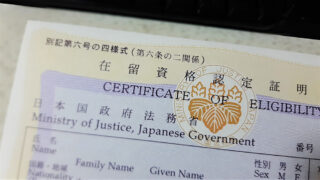
For a foreign-national representative or director to carry out management activities in Japan, a Business Manager visa (the “Business Manager” status of residence) is required. The requirements were substantially revised by the 2025 amendment to the ministerial ordinance, and the main ones are as follows.
- Capital / total investment: ¥30 million or more (¥5 million before the revision)
- Experience / education (for the manager): at least three years of business management experience, or a master’s-equivalent or higher degree in business management or a related field
- Employment obligation: employ at least one full-time staff member (a Japanese national, permanent resident, etc.)
- Japanese language ability: either the applicant or a full-time employee must have Japanese proficiency equivalent to CEFR B2 or higher
- Expert review: the new business plan must be reviewed by a person with specialized management knowledge (such as an attorney or certified public accountant), except in cases such as enterprises comparable in scale to a listed company
- Securing premises: you must have secured an office with genuine operational substance
- The applicant must be substantially engaged in management or administration
Note that for those already residing in Japan, compliance with the revised standards will, in principle, be required from the first application to renew their period of stay made after three years have passed since the revision took effect.
These requirements are assessed in combination, so it is essential to design your setup with the visa requirements in mind from the pre-incorporation stage.
What to check: Confirm with a specialist whether you meet all of the revised requirements—capital, management experience, hiring plans, Japanese language ability, and expert review of your business plan.
Point 4: Is Your Capital Amount Appropriate?
Legally, you can set up a company with as little as ¥1 in capital, but if you are aiming to obtain a Business Manager visa, you need capital of ¥30 million or more (under the 2025 ordinance revision). Some industries also require a certain level of capital in order to obtain a license—for example, in the real estate brokerage business, ¥10 million or more is the general benchmark for the required financial basis.
On the other hand, capital that is too high increases your incorporation registration costs (the registration and license tax) and raises the per-capita portion of corporate inhabitant tax (which grows with the amount of capital). It is important to set an amount that matches your actual circumstances. Capital also serves as post-incorporation working funds and can go toward office deposits, equipment, and other investments. Deciding on a capital amount under a funding plan that both satisfies the visa requirements and aligns with your business plan lays the groundwork for a stable launch.
What to check: Consider the appropriate amount of capital from each of three angles—licensing, visa, and tax.
Point 5: Have You Secured the Right Kind of Office?
Establishing a Japanese company requires a registered head-office address, and applying for a Business Manager visa requires that you secure an office with genuine operational substance.
A virtual office is inexpensive, but in the Business Manager visa screening it will be judged to lack any real business substance and your application will be denied. You need to secure a serviced office with its own dedicated space, or an ordinary leased office. Depending on the industry, a license may also require an office or facilities of a certain size. Because the office address is used in the company registration as well, changing it later means incurring the cost and effort of a change registration. It is important to choose a suitable office from the start, with an eye to your actual operations and future room to grow.
What to check: Confirm whether your office type—virtual, serviced, or leased—meets the visa screening and licensing requirements.
Point 6: Have You Set Up Your Post-Incorporation Tax and Accounting Framework?
After incorporating, you must handle Japanese tax filings and accounting properly. For foreign-affiliated companies in particular, tax issues can arise around transactions with the parent company—such as transfer pricing, dividends, and director remuneration.
It is important to engage a tax accountant on a retainer basis right after incorporation and to get your tax filings and financial-statement preparation underway. Some filings have deadlines—for instance, you must submit a notification of corporation establishment to the tax office within two months of setting up the company. Missing a deadline can put you at a tax disadvantage, such as losing the ability to use blue-form tax returns. Choosing a tax accountant around the time of incorporation and sharing the filing schedule with them lets you head off these risks. A tax accountant who can work in multiple languages also makes communication with your head office smoother.
What to check: Arrange a retainer with a trustworthy tax accountant before, or immediately after, incorporation.
Point 7: Are You Ready for Hiring and Labor Management?
If you hire employees in Japan, you must manage labor matters in accordance with Japanese law, including the Labor Standards Act, social insurance, and employment insurance. If you hire foreign employees, you will also need to verify and keep track of their status of residence.
Work rules become mandatory to prepare and file once you employ ten or more people, but putting them in place even with fewer than ten employees helps prevent labor disputes. Japan strongly protects workers’ rights, and disputes over dismissals and wages are not unusual even at foreign-affiliated companies. It is important to prepare an employment contract that clearly sets out working conditions before you hire, and to enroll employees properly in social insurance.
What to check: Set up a working relationship with a certified social insurance and labor consultant in line with your hiring plans.
Point 8: Have You Built a Coordinated Team of Specialists?
Expanding into Japan calls for several specialists—an administrative scrivener (gyoseishoshi), a judicial scrivener (shiho-shoshi), a tax accountant, a social insurance and labor consultant, and others. Consulting each of them separately can leave the overall plan inconsistent.
Channeling everything through a single point of contact, with the specialists coordinating among themselves, is the key to avoiding missed steps, delays, and wasted costs. One effective approach is to engage a group of specialists who can handle everything in one stop, as Touch Immigration Law Firm does.
What to check: Confirm that you have a single point of contact and that the specialists are set up to work together.
Point 9: Have You Built Enough Slack into Your Schedule?
Against a goal such as “we want to start operating in Japan in a given month,” it is important to build a schedule by working backward. Company incorporation, licensing, and the visa application each take time, and you need to sort out which parts can run in parallel and which must happen in sequence.
In most cases, the companies that start out with a comfortable margin in their schedule are the ones that achieve a smooth entry into Japan. “It took longer than we expected” is an extremely common refrain, so acting early at every stage matters. There are many sources of unexpected delay in particular—gathering, translating, and authenticating documents taking longer than anticipated; the review for opening a bank account dragging on; or the visa screening calling for additional documents. Building a realistic schedule with a buffer of two to three weeks at each step is, in the end, the fastest route to entering Japan on time.
What to check: Draw up a schedule working backward from your goal, and get an accurate grasp of how long each procedure takes.
Point 10: Are You Looking Ahead to How You’ll Operate After Entry?
Entering Japan does not end the moment your incorporation and various applications are complete. Even after you begin operating, ongoing procedures keep coming up—renewing your status of residence, renewing licenses, filing taxes, and various change registrations.
It is also important to anticipate in advance how you would respond if your Japanese business does not go as planned—changing, scaling back, or withdrawing it. Building an ongoing relationship with specialists you can continue to consult after entry forms the foundation for running your Japanese operations stably. In particular, at each Business Manager visa renewal (after one, three, or five years), your track record in Japan is reviewed afresh. Keeping records that demonstrate the continuity of your business—sales, tax payments, employment—up to date as a matter of routine leads to a smooth renewal.
What to check: Put your post-entry advisory arrangements and points of contact in place ahead of time. To avoid ending up unsure of whom to turn to once you’ve entered Japan, it is important to build a pipeline to specialists you trust from the incorporation stage onward.
Summary
To make your expansion into Japan a success, it is important to organize a wide range of issues in advance—not just the incorporation procedures, but also licensing, visas, tax, labor, coordination among specialists, and schedule management. Rather than “pressing ahead without really understanding,” the mindset of “grasping the full picture before you make your first move” is the best way to prevent later rework and added costs.
Every one of these ten points is the kind of issue where realizing it after the fact tends to be too late. Checking them off one by one early in your planning is, in the end, what leads to entering Japan in the shortest time and at the lowest cost.
At Touch Immigration Law Firm, our free initial consultation walks you through the full picture of the procedures your expansion into Japan will require, along with their priorities. Feel free to reach out even if you’re still at the “I don’t know where to start” stage. Our specialists will organize the whole process for you and propose the best way forward.