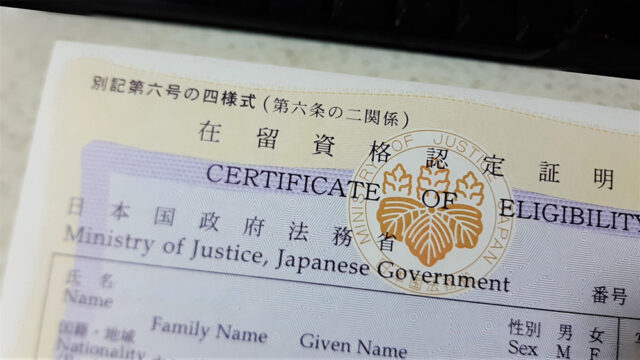



You might assume that once you form a company in Japan you can start operating right away — but that assumption can lead to an unexpected halt. In Japan, depending on the business sector, obtaining a government “license” (permit, registration, license, or notification) before you begin operating is required by law. At the same time, not every business needs one. Consulting, general IT and software, and much of wholesale and trading can be started without any special operating license. What matters is to determine early, once the business content is set, whether “your business needs a license.” In this article, an immigration lawyer who specializes in licensing explains in plain terms how to judge whether a license is required, a “map” of representative sectors and “to whom and when” you apply, and why licensing should be advanced in parallel with company formation and residence status (the visa).
What you’ll learn in this article
- “Forming a company = you can operate right away” is not true — how to tell a business that needs a license from one that does not
- The “license map,” where the filing destination differs by sector (the distinction among permit / registration / license / notification, and the competent authority)
- The key points and cautions for the representative sectors foreign companies often touch (secondhand dealers, restaurants, liquor, lodging, travel)
- Why licensing should be advanced “in parallel” with company formation and residence status
- Licensing is an immigration lawyer’s core work — our firm’s support fees and a free-consultation guide
- First, Clear Up a Misconception — “Once the Company Exists, You Can Operate Right Away” Is Not Always True
- The Starting Point Is Judging “Whether Your Business Needs a License”
- The “Map” of Licensing — a Quick Reference on Who Grants the License
- A Closer Look at the Representative Sectors Foreign Companies Often Touch
- Why Licensing Should Be Advanced “in Parallel”
- 4 Points That Are Easy to Overlook (Cross-Cutting)
- Licensing Is an Immigration Lawyer’s Core Work — Start with the Required-or-Not Judgment
First, Clear Up a Misconception — “Once the Company Exists, You Can Operate Right Away” Is Not Always True
When preparing to enter Japan, attention tends to concentrate on company formation and residence status (the visa), and “licensing” is a theme that is easily overlooked. Yet depending on the sector, the license is precisely the precondition for opening. For example, buying and selling secondhand goods requires a permit from the police (the Public Safety Commission), and opening a restaurant requires a permit from the public health center; until these come through, you cannot begin operating. If you proceed with the feeling that “once the company exists, the rest is free to do as I like,” you can fall into the situation where registration is finished but operation cannot begin.
What is important here is that most licenses are granted to the “company (the legal entity).” As a rule, you apply after the company comes into being (or in parallel with formation). Furthermore, if the business purpose in the “articles of incorporation” (the document setting out the company’s basic rules) does not contain the wording a license requires, you can stumble at the application stage. In other words, licensing is not something to “think about after forming the company”; it needs to be built in from the stage of drafting the articles for formation.
The Starting Point Is Judging “Whether Your Business Needs a License”
The first thing to convey is that not every business in Japan needs a license. Whether a license is required depends on the content of the business, and there are also many businesses that can be started without one. Confirming “which of the two your company falls into” is the starting point.
Examples of businesses that can often be started without a license include professional services such as management consulting, general IT and software development or contracting, web services, and much wholesale and trading (depending on the goods handled, a license can be involved). On the other hand, specific sectors are required by law to obtain a license. Representative examples include restaurants, buying and selling secondhand goods (secondhand dealers), liquor sales, lodging and minpaku, the travel agency business, worker dispatch, the construction business, the real estate business (real estate brokerage), the transport business, and some businesses involved in import and export.
However, even within the same “restaurant” or “trading,” whether a license is required and the type needed change according to what you provide or the goods you handle. Rather than jumping to the conclusion that “my business definitely needs / does not need this permit,” it is important to confirm one item at a time based on the details of the business. If you are unsure, you can organize the matter starting from the required-or-not judgment in the free consultation described later.
The “Map” of Licensing — a Quick Reference on Who Grants the License
One thing foreign companies find confusing in Japanese licensing is that the filing destination differs by sector. Unlike the common overseas feeling that “a business license is handled together at a one-stop government window,” Japan has a “siloed” structure in which the competent authority differs by system. For secondhand goods it is the police (the Public Safety Commission); for restaurants, the public health center; for liquor, the tax office; for the travel agency business, the Japan Tourism Agency or the prefecture — and so on. “Even for one company’s businesses, the party you apply to differs by license” is the norm.
Something to grasp at the same time is the difference in the “type” of system. Japanese licenses are broadly divided into “permit,” “registration,” “license,” and “notification,” and each differs in the weight of the procedure and the strictness of the review (in general, permits and licenses tend to have a heavier review, and notifications a relatively lighter one). Listing representative sectors by sector × type of system × filing destination (competent authority) gives the following.
| Business (example) | Type | Filing destination (competent authority) | Main governing law |
|---|---|---|---|
| Buying/selling of secondhand goods (secondhand dealer) | Permit | Prefectural Public Safety Commission (via the police station with jurisdiction over the main office) | Secondhand Goods Business Act |
| Restaurant (restaurant, café, izakaya, etc.) | Permit | Public health center | Food Sanitation Act |
| Liquor sales (ongoing sale of unopened liquor) | License | Head of the competent tax office | Liquor Tax Act |
| Minpaku (housing accommodation business) | Notification | Prefectural governor, etc. (incl. public-health-center cities and special wards) | Housing Accommodation Business Act (the “minpaku” law) |
| Minpaku (special-zone minpaku) | Certification | Designated municipality | National Strategic Special Zones Act |
| Lodging (simple lodging / inn / hotel business) | Permit | Public health center (prefectural governor, etc.) | Hotel Business Act |
| Travel agency business (Class 1) | Registration | Commissioner of the Japan Tourism Agency | Travel Agency Act |
| Travel agency business (Class 2 / 3 / area-limited) | Registration | Prefectural governor | Travel Agency Act |
| Worker dispatch business | Permit | Minister of Health, Labour and Welfare | Worker Dispatch Act |
| Construction business | Permit | Minister of Land, Infrastructure, Transport and Tourism / prefectural governor | Construction Business Act |
| Real estate brokerage business | License | Minister of Land, Infrastructure, Transport and Tourism / prefectural governor | Real Estate Brokerage Act |
| General cargo trucking business | Permit | Minister of Land, Infrastructure, Transport and Tourism (District Transport Bureau) | Trucking Business Act |
※ The above are representative examples. Even within the same sector, the type of license required and whether one is needed change according to the goods and services handled and the manner of operation. For the final judgment on whether a license is required, we recommend confirming with each authority’s official information and with a professional.
A Closer Look at the Representative Sectors Foreign Companies Often Touch
From here, for the representative sectors that foreign companies often touch, we look in turn at “what license it is, where you apply, and where to be careful.”
Buying and Selling Secondhand Goods (Secondhand Dealer Permit)
A business that buys, sells, or exchanges secondhand goods, or buys them up and resells them (reuse shops, buying and selling used cars and used machinery, buy-up businesses, etc.), requires the “secondhand dealer permit” under the Secondhand Goods Business Act. The filing destination is the prefectural Public Safety Commission, and the actual procedure is carried out via the police station with jurisdiction over the location of the main office. A distinctive point is that for each office you must appoint one “manager” as the person responsible for conducting the business properly. It takes roughly 40 days from application until the permit comes through (a standard processing period; it varies by police and municipality).
A Point to Watch When Entering Japan
If you start operating (especially buying up) before the permit notice arrives, it can amount to unlicensed operation. Because you cannot begin transactions until the permit comes through, you need to allow slack in the opening schedule. Note that in a case such as buying up used cars and used parts and exporting them overseas, on top of the secondhand dealer permit, sector-specific issues overlap — such as membership registration for used-car auctions and export procedures. We take up this concrete sequencing in detail in a forthcoming sector-by-sector case study.
Restaurants (Restaurant Business Permit)
To open a restaurant such as a restaurant, café, or izakaya, you need the public health center’s “restaurant business permit” under the Food Sanitation Act. In the 2018 amendment (in force from June 2021), sanitation management along the lines of HACCP, an international sanitation-management method, was institutionalized, and the permitted categories were reorganized (the former “coffee shop business permit” has been consolidated into the restaurant business permit). Each store must place one “food sanitation supervisor” (the person in charge of sanitation management, obtained by attending training, etc.), and there is also an inspection by the public health center to confirm that the facility meets the standards. As a guide, it is roughly 2–3 weeks from application to permit (varies by municipality and facility).
A Point to Watch When Entering Japan
The restaurant business permit alone may not be enough. For business types that mainly serve liquor during the hours from midnight to 6 a.m. (bars, izakaya, etc.), you must separately submit a “notification of commencement of a late-night liquor-serving restaurant business” to the police station. Also, takeout and delivery, or the items handled (manufacturing confectionery or prepared foods, etc.), may require a different permit or notification, and if you sell liquor in an unopened state, the liquor sales license (tax office) described below is also involved. What is needed is safest to confirm with the public health center and a professional once the store’s business type is set.
Liquor Sales (Liquor Sales License)
A business that continuously sells unopened liquor needs the “liquor sales license” under the Liquor Tax Act, and the filing destination is the head of the tax office with jurisdiction over the location of the sales premises (if you merely pour and serve by the glass in a restaurant, this license is not required). The license is broadly divided into “retail” and “wholesale” by the sales counterpart, and is further subdivided by the items handled and the sales method (in-store, mail order, etc.). As a rule, you need to allow about 2 months for the review.
A Point to Watch When Entering Japan
If you handle imported liquor, you need to be careful about the category. For example, to wholesale liquor you have imported yourself you need an “imported liquor wholesale license,” and to retail to consumers in two or more prefectures via the internet, etc., you need a “mail-order liquor retail license” — that is, each sales form requires a different license. Because it is not the case that “obtaining one liquor license lets you sell anything,” it is important to sort out “where you source from, to whom, by what method, and what liquor you sell,” and then determine the license you need.
Lodging and Minpaku (Distinguishing 3 Systems)
The lodging business has three systems that look alike but are not, and depending on which you choose, the requirements, the procedure, and the filing destination all change. First is the “notification” under the Housing Accommodation Business Act (the so-called minpaku law). You can begin with a notification to the prefectural governor, etc., but the upper limit on the number of days per year you may lodge people is set at 180. Second is the “special-zone minpaku” of the National Strategic Special Zones, a system in which you receive “certification” from a designated municipality (the way the day limit is treated differs from the minpaku law). Third is the “permit” under the Hotel Business Act; simple-lodging operation and inn/hotel operation fall under this, and the public health center is the competent authority. If you want to operate without limit throughout the year, the Hotel Business Act permit is an option.
A Point to Watch When Entering Japan
Even within the same “minpaku,” the rules differ entirely depending on the system you choose. Furthermore, under the Housing Accommodation Business Act, municipalities may set their own restrictions (add-ons) on operating days or areas by ordinance, and in recent years some municipalities have strengthened restrictions. Because which system can be used at the property’s location, and what ordinances exist, vary greatly by region, be sure to confirm the latest content at the municipal window for the property’s location.
Travel Agency Business (Travel Agency Registration)
A business that plans and arranges travel and sells it requires “registration” under the Travel Agency Act. The categories are divided by the scope of business you can handle: Class 1, which can broadly handle up to overseas package tours for the general public, is registered by the Commissioner of the Japan Tourism Agency, while the others (Class 2, Class 3, and area-limited) are registered by the prefectural governor with jurisdiction over the main office. In addition to a certain financial base and a business deposit for the protection of users (which can be replaced by a compensation business deposit contribution if you join a travel agency association), registration requires appointing a qualified “travel service manager” for each office.
A Point to Watch When Entering Japan
Depending on the type of travel you handle (overseas or domestic, package or arranged travel), the required category, financial base, and the qualification of the manager to be appointed change. Even if an overseas travel company with no office in Japan accepts applications through a Japanese-language site, unless it has obtained registration under Japan’s Travel Agency Act, users cannot receive that law’s protection. Keep in mind that to operate a travel agency business in Japan, registration in Japan is the precondition.
Besides these, examples that foreign companies often touch include the worker dispatch business that provides staffing (permit of the Minister of Health, Labour and Welfare); the construction business (permit of the Minister of Land, Infrastructure, Transport and Tourism or the prefectural governor); the real estate brokerage business that buys, sells, and brokers real estate (license of the Minister of Land, Infrastructure, Transport and Tourism or the prefectural governor; a “real estate transaction specialist” must be placed at each office); and the general cargo trucking business that carries goods by truck (permit of the Minister of Land, Infrastructure, Transport and Tourism = District Transport Bureau). Even for import/export businesses, depending on the goods handled, the liquor or food licenses/permits mentioned above may be relevant.
Why Licensing Should Be Advanced “in Parallel”
Licensing is a classic critical path (the bottleneck that determines the total time required) that governs a foreign company’s entry schedule. There are broadly three reasons.
Reason 1: Licensing Takes Time
From application until the permit or registration comes through takes anywhere from several weeks to several months depending on the sector. Because its nature is “you can only wait for the result after applying,” the more you put it off, the more the opening slips back.
Reason 2: It Is Linked to the Business Purpose in the Articles
As noted above, if the business that is the premise of the license is not written into the business purpose in the articles, you stumble at the application stage.
Reason 3: There Are Facility, Office, and Qualified-Person Requirements
Many licenses have requirements on both the “people” and “facility/office” sides — for example, placing qualified persons such as a food sanitation supervisor, a real estate transaction specialist, or a travel service manager, and a facility inspection by the public health center. These are closely intertwined with the schedules for company formation and residence status.
Something to watch especially is the issue of the office (the address). With an office lacking substance — a virtual office, a rented meeting room, and the like — not only can you fail to meet the “independent office” requirement of the “Business Manager” residence status (the Business Manager visa), but in licensing too you may not pass at the point where facility standards or the substance of the office are confirmed. Note that the “Business Manager” residence status was tightened in the October 2025 revision of the standards — in addition to securing an independent office, requirements such as capital, a full-time employee, and a business plan were made stricter (for details, see the Business Manager visa article) — so the importance of preparing early and in parallel has increased all the more. Company formation, residence status, and licensing are separate procedures, yet they share the “same materials” of the office, the business plan, and the substance of the business. That is precisely why, rather than starting on licensing only after formation is entirely finished, it is important to move the required-or-not check and the document preparation in parallel with formation, as early as possible.
4 Points That Are Easy to Overlook (Cross-Cutting)
Let us organize the content so far as points that are easy to overlook.
1. The Filing Destination Differs by Sector
The Public Safety Commission, the public health center, the tax office, the Japan Tourism Agency, the prefectural governor, the Ministry of Health, Labour and Welfare, the Ministry of Land, Infrastructure, Transport and Tourism — the procedure destination differs by sector. If you keep the overseas feeling of “one-stop permission,” the procedure becomes more complex than expected.
2. An Office Lacking Substance May Not Pass
A virtual office and the like may fail to meet the requirements in both residence status and licensing. The initial choice of address has a chain effect on the visa, the account, and licensing.
3. Unlicensed Operation Carries Penalties
For many licenses, operating without a permit, license, or registration is subject to penalties. To avoid “starting without knowing,” confirm whether a license is required at the early stage once the business content is decided.
4. “After Forming the Company” Is Too Late
Licensing takes time and is linked to the business purpose in the articles. Advancing preparation early, in parallel with formation and residence status, is the trick to not delaying the opening.
Licensing Is an Immigration Lawyer’s Core Work — Start with the Required-or-Not Judgment
In Japan, the procedures involved in entry are split by professional: registration by a judicial scrivener, tax by a tax accountant, and labor by a labor and social security attorney. Among these, the license application procedure itself is the professional domain (core work) of the immigration lawyer (gyoseishoshi). Touch Immigration Lawfirm, as an immigration law firm specializing in international work, can take on license applications directly. At the same time, the filing agency and document preparation for residence status (the visa) are also handled by the immigration lawyer, while company formation registration is handled by our partner judicial scrivener, tax by a tax accountant, and labor by a labor and social security attorney — within this division of roles, Touch coordinates as your overall point of contact.
Our firm’s operating-license support fees (tax included) are as follows. The statutory fees and actual costs for the license application are separate, and sectors not on the fee table are quoted separately.
| Business | Our firm’s support fee (tax incl.) |
|---|---|
| Secondhand dealer (sale of secondhand goods) | 77,000 yen |
| Food service (cafeterias, restaurants; takeout / delivery food service) | 77,000 yen |
| Manufacture and sale of liquor | 198,000 yen |
| Minpaku (special-zone minpaku) | 275,000 yen |
| Minpaku (simple lodging) | 297,000 yen |
| Inn / hotel business | 418,000 yen |
| Travel agency business | Quoted separately |
※ The above are our firm’s support fees (tax included). The statutory fees and actual costs for the license application are separate. The cost of company formation itself is a different line item (→ the “Cost of Entry” article).
What matters most in licensing is not the technique of the application but the overall design of “whether your business needs a license, and if so, which license to apply for, to whom, and when.” Misjudge this, and the whole entry — including formation and residence status — slips back. Starting from the required-or-not judgment and organizing the big picture is, in the end, the fastest route.
Start with a Free Consultation (STEP 0: Free)
“Does my business need a Japanese license?” “If it does, which permit should I apply for, to whom, and when?” Why not start by organizing these? At Touch Immigration Lawfirm, we offer a free initial consultation (STEP 0: Free Consultation). We will listen to your business content and entry plan, and guide you through the required-or-not judgment for licensing and the big picture of the procedures, including company formation and residence status.
If the consultation shows that concrete support is needed, we will then propose a paid support plan suited to your needs (PHASE 1: Initial Consulting, from 330,000 yen [tax incl.], etc.) and carefully explain the cost outlook. Please feel free to get in touch.
Contact
Email: contact@touch.or.jp
Phone: Saitama Office 048-400-2730 / Tokyo Office 03-6825-0994